
New Research Reveals a Professional Development Crisis—and a Clear Path Forward
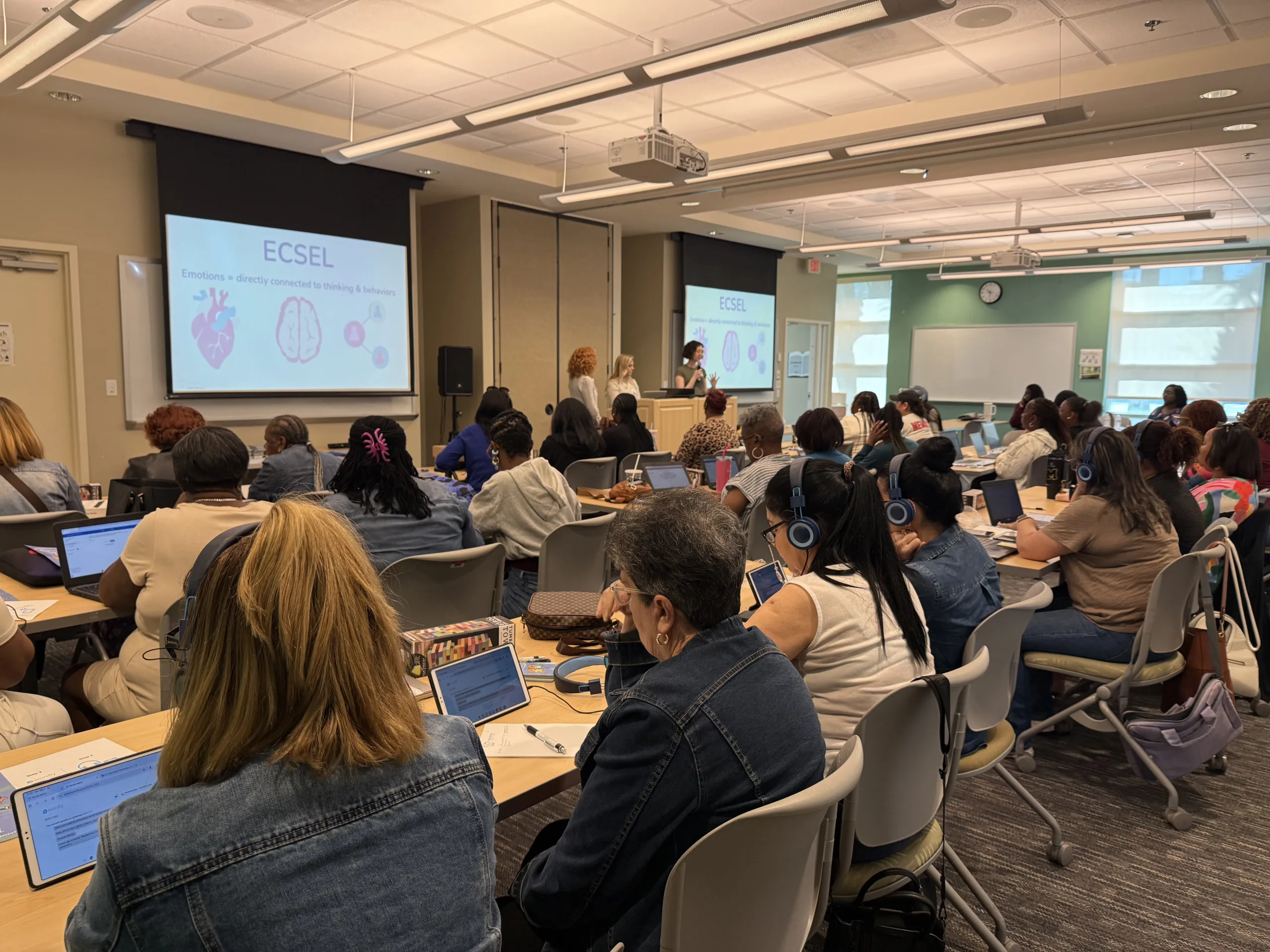
Early childhood education stands at a crossroad. The 2025 RAND reports and a national scan of superintendents’ strategic plans show pre-K has moved to the center of the agenda—but professional development systems have not caught up. While kindergarten readiness scores and enrollment numbers grab headlines, mounting evidence reveals that traditional measures tell only half the story. The other half—encompassing emotional intelligence, self-regulation, and foundational neural development before age six—may be more predictive of long-term student outcomes than any academic assessment currently in use (Housman, 2017; Housman et al., 2018).
When the RAND Corporation released its comprehensive American Public School Pre-K Teacher Survey in December 2025, the findings confirmed what many education leadership veterans have long suspected: public school pre-K teachers represent an undersupported population within our educational systems (Woo et al., 2025). As someone who spent two decades in public education—twice a PK-12 superintendent—I have witnessed this disconnect firsthand.
64% of Your Pre-K Teachers Are Being Trained by People Who Aren’t Early Childhood Experts
“That statistic should stop every superintendent in their tracks. We are sending teachers who work with children during the most critical period of brain development to professional learning sessions led by facilitators who may have never set foot in a pre-K classroom.” — Woo et al., 2025
It gets worse. Sixty-two percent of pre-K teachers said their administrators provided little guidance about which professional development to attend. Meanwhile, 95% of teachers received some training on teaching emotional intelligence skills—but a majority still indicated they needed additional support (Woo et al., 2025). We are checking boxes without building capacity.

90% of Brain Development Happens Before Kindergarten
I have written extensively about wellness-centered approaches within Multi-Tiered Systems of Support (MTSS) frameworks, arguing that non-academic factors serve as powerful predictors of student outcomes (Zywicki, 2025). The neural pathways supporting self-regulation, empathy, and executive functioning are being constructed right now in your district’s PK-3 and PK-4 classrooms (Perry, 2000; Shonkoff & Phillips, 2000). Miss this window, and your district spends thirteen years playing catch-up with interventions that would have been unnecessary if the foundation had been built correctly.
The COVID-19 pandemic made this reality impossible to ignore. More than 80% of public schools reported that the pandemic negatively impacted students’ behavioral and social-emotional development (National Center for Education Statistics, 2022). Research demonstrates lasting effects: students who attended Tulsa’s universal pre-K program missed less school, were less likely to fail courses, and were more likely to take Advanced Placement courses through high school (Amadon et al., 2022).
The Gap Between Scripted Lessons and Real-Time Emotional Moments
Your district very likely has a scripted SEL curriculum adopted during the height of the pandemic. Perhaps teachers deliver a canned 20-minute lesson every Thursday during circle time. But what happens at 10:15 AM on a Monday when a four-year-old melts down because another child took their block?
The scripted lesson isn’t until Thursday. Your teacher needs strategies now—in the heat of the moment—precisely when the child’s stress response system is activated and executive function is offline. This is the gap that traditional scripted SEL curricula cannot fill: the difference between talking about emotions during designated lesson time and coaching children through emotions during lived experience (Housman, 2017).
How begin to ECSEL Fits Within Your Existing MTSS Framework
Strategic planning priorities among superintendents have shifted dramatically. According to a 2023 analysis of 2,200 strategic plans, Multi-Tiered Systems of Support (MTSS) saw the largest increase of any topic—rising 14% and now appearing in 32% of district plans. Mental health increased 9.8% (appearing in 40% of plans), while community engagement rose 7% (34% of plans) (Zalaznick, 2023).
begin to ECSEL directly addresses these emerging priorities by functioning as your Tier 1 universal foundation within an MTSS framework. Rather than a new initiative, it serves as an accelerant for what you’re already building:
- Tier 1 Foundation: Every child receives emotionally intelligent adult support throughout the day—not just during “SEL time.” Teachers use real emotional moments as teaching opportunities, providing co-regulation in the moment rather than waiting for scripted lessons.
- Tier 2 Intensification: High-intensity co-regulation during challenging moments. Adults are equipped with real-time strategies—Causal Talk in the Context of Emotional Experience (CTEE)—to support dysregulated children immediately (Housman, 2017; Housman et al., 2018).
- Tier 3 Prevention: Fewer children ever need Tier 3 behavioral supports. Strong Tier 1 emotional competence instruction reduces inappropriate special education referrals and behavioral incidents downstream.
This alignment matters: universal Tier 1 emotional intelligence instruction is not separate from your academic MTSS—it is a prerequisite for academic Tier 2 and Tier 3 efficiency. Children who cannot regulate their emotions cannot access rigorous instruction, regardless of how many reading interventionists you hire.
What 40 Years of Research Delivers That Generic PD Cannot
Dr. Donna Housman—a clinical psychologist, former clinical professor of psychiatry at Boston University School of Medicine, and founder of the Beginnings Child Development Center lab school—has spent four decades researching, developing, and refining the begin to ECSEL (Emotional, Cognitive, and Social Early Learning) program. Her peer-reviewed research, published in journals including the International Journal of Emotional Education and Early Child Development and Care, establishes a comprehensive, evidence-based approach built specifically for birth through age six settings (Housman, 2017). Here’s what makes it different:
Measured Outcomes with Effect Sizes Superintendents Need. A three-year longitudinal study found children in begin to ECSEL classrooms significantly outperformed national normative samples—and did so at a younger age. The peer-reviewed research demonstrated large effect sizes for attachment (d=0.87) and initiative (d=0.98), with children significantly outperforming peers who were, on average, nearly a year older. Students showed marked improvement in emotional competence, self-regulation, empathy, and prosocial skills (Housman et al., 2018).
A multi-state pilot study of 22 early childhood centers showed measurable improvements after just 3-4 months: 79% of schools reported notable gains in children’s problem-solving and conflict resolution skills, 86% reported positive changes in classroom dynamics and teacher well-being, 100% saw improved emotional literacy among students, and 86% reported improved staff emotion regulation (Housman Institute, 2024).
Real Implementation Data from PK3 and PK4. A two-year case study at Ellis Early Learning (Boston, MA) serving 326 children—61% receiving government childcare subsidies, 65% children of color, 20% with open Department of Children and Families cases—demonstrated that 91.4% of teachers reported improved ability to reflect on triggers and emotional reactions, 93.1% used responsive approaches when supporting dysregulated children, 88% reported overall job satisfaction, and virtually zero teacher turnover after two years of implementation (Housman Institute, 2024).
Among students: 91.7% demonstrated basic understanding of how emotions impact behavior, 91.6% recognized when help was needed for themselves and others, and 83.4% used words to express emotions, likes, dislikes, needs, and wants (Housman Institute, 2024).
Expert-Led Coaching from Early Childhood Specialists. Unlike generic PD that RAND criticized, begin to ECSEL provides sustained coaching from early childhood specialists—not one-time workshops from generalists (Woo et al., 2025). The program includes 12 asynchronous courses building educators’ own emotional awareness and regulation, monthly support from trained coaches, and a train-the-trainer model for sustainability.
Built for Inclusive Settings—Where Scripted Curricula Fall Short. The ECSELent Adventures curriculum addresses exactly what RAND found missing: 64% of teachers needed help adapting materials for children with disabilities, and 60% needed support for English learners (Shapiro et al., 2025). Unlike rigid scripted SEL programs that offer one-size-fits-all lesson plans, begin to ECSEL was designed from inception for inclusive classrooms serving children with special needs. The program is fully available in Spanish and Portuguese—a critical capability that scripted curricula simply cannot match. This built-in differentiation has been validated across diverse settings including economically disadvantaged populations, multilingual learners, and children receiving special education services (Housman et al., 2018).
Prevention Costs a Fraction of Intervention
“It is far easier to prevent than to repair. Quality universal instruction at Tier 1 generates far better outcomes—at far lower cost—than waiting to provide intensive Tier 3 intervention.” — Posamentier, 2021
Just as I have advocated for wellness-centered MTSS frameworks that position student wellbeing at the center rather than as an add-on (Zywicki, 2025), the same principle applies to early childhood emotional intelligence instruction.
Every superintendent knows the real costs. Typical ranges in the literature suggest teacher turnover in early childhood averages 30% annually, with replacement costs ranging from $4,000-$8,000 per teacher. In a typical 50-teacher pre-K program losing 6-8 teachers per year, that’s $24,000-$64,000 in annual turnover costs alone. Compare that to comprehensive emotional intelligence professional development that builds teacher capacity and reduces burnout.
The downstream savings are even more compelling. A single student requiring intensive behavioral intervention in middle school costs districts $15,000-$25,000 annually in additional staffing, specialized placements, and administrative time. Multiply that across the 10-15% of students who will eventually need Tier 3 behavioral supports. Now compare that to the minuscule cost per student for comprehensive pre-K emotional intelligence instruction that prevents those escalations in the first place.
This is not a “find new money” proposition. Smart districts are braiding existing PD dollars, leveraging state preschool quality grants, and reallocating Title II funds to make this investment within current budgets. The question is not whether you can afford specialized pre-K professional development—it’s whether you can afford the downstream costs of not providing it.
What This Means for Your District
As approximately 1.7 million children are now enrolled in state-funded pre-K programs nationally (National Institute for Early Education Research, 2024), the quality of these programs depends fundamentally on teacher preparation and ongoing support. The begin to ECSEL Training and Mastery Program offers precisely what RAND found missing: professional learning facilitated by early childhood experts with demonstrated expertise in emotional intelligence development, sustained coaching and mentorship rather than one-time workshops, practical strategies for differentiation across diverse learner populations, and integrated attention to both educator well-being and instructional practice.
Let me be clear: this is not one more initiative. It is a way to make your existing SEL, MTSS, and strategic-plan commitments coherent for your youngest learners—and to finally give your pre-K teachers the specialized support they have been asking for.
Districts that invest in specialized, evidence-based professional development for their PK-3 and PK-4 teachers are not just improving early childhood outcomes—they are reducing the intervention burden across their entire K-12 system.
Diagnostic Questions for Your System
Before our conversation, consider these questions:
- Who is actually leading your pre-K PD—early childhood specialists or generalists?
- How often do your PK-3 and PK-4 teachers receive coaching in real-time co-regulation, not just scripted SEL delivery?
- Can you show Tier 1 emotional intelligence metrics in your MTSS dashboard alongside reading and math?
- What is your annual turnover rate among early childhood staff, and what is that costing you?
Let’s Talk About What a Pilot Looks Like in Your District
RAND has illuminated what many have long known: pre-K teachers deserve better support. The neural architecture being built in your PK-3 and PK-4 classrooms today will shape learning trajectories through high school graduation and beyond (Shonkoff & Phillips, 2000).
The data is clear. The solution exists. The students in your district’s early childhood classrooms cannot wait.
If you’re ready to explore how begin to ECSEL aligns with your strategic priorities—particularly your MTSS framework, mental health initiatives, and teacher retention goals—let’s start a conversation about what a pilot looks like in your context.
Author
Dr. Robert R. Zywicki is Vice President at Housman Learning. He has coached hundreds of PK-12 leadership teams throughout the United States. He is the author of All Paths Lead to Graduation: Fulfilling the Promise of an Education in America, published by the MTSS Leadership Network.
References
Amadon, S., Gormley, W. T., Claessens, A., Magnuson, K., Hummel-Price, D., & Romm, K. (2022). Does early childhood education help to improve high school outcomes? Results from Tulsa. Child Development, 93(4), e379-e395. https://doi.org/10.1111/cdev.13752
Housman, D. K. (2017). The importance of emotional competence and self-regulation from birth: A case for the evidence-based emotional cognitive social early learning approach. International Journal of Child Care and Education Policy, 11(1), 1-19. https://doi.org/10.1186/s40723-017-0038-6
Housman, D. K., Denham, S. A., & Cabral, H. (2018). Building young children’s emotional competence and self-regulation from birth: The begin to ECSEL approach. International Journal of Emotional Education, 10(2), 5-25. https://ijee.iecolab.org/index.php/ijee/article/view/148
Housman Institute. (2024). ECSEL white paper: Unlocking emotional intelligence in early childhood education. Housman Institute. https://www.housmanlearning.com
National Center for Education Statistics. (2022). More than 80 percent of US public schools report pandemic has negatively impacted student behavior and socio-emotional development. U.S. Department of Education. https://nces.ed.gov/whatsnew/press_releases/07_06_2022.asp
National Institute for Early Education Research. (2024). The state of preschool 2024: State preschool yearbook. Rutgers Graduate School of Education. https://nieer.org/yearbook/2024
Perry, B. (2000). How the brain learns best. Instructor, 110(4), 34-35.
Posamentier, J. (2021, May 12). Social-emotional learning: The fifth core. Flypaper, Thomas B. Fordham Institute. https://fordhaminstitute.org/national/commentary/social-emotional-learning-fifth-core
Shapiro, A., Steiner, E. D., Woo, A., Cannon, J. S., Doss, C. J., Karoly, L. A., & Kassan, E. B. (2025). Instructional resources in public school-based pre-K (RR-A3279-3). RAND Corporation. https://www.rand.org/pubs/research_reports/RRA3279-3.html
Shonkoff, J. P., & Phillips, D. A. (Eds.). (2000). From neurons to neighborhoods: The science of early childhood development. National Academies Press. https://nap.nationalacademies.org/catalog/9824/from-neurons-to-neighborhoods-the-science-of-early-childhood-development
Woo, A., Cannon, J. S., Doss, C. J., Shapiro, A., & Steiner, E. D. (2025). Professional learning opportunities for public school-based pre-K teachers (RR-A4412-4). RAND Corporation. https://www.rand.org/pubs/research_reports/RRA4412-4.html
Zalaznick, M. (2023, October 4). Strategic plans: 5 topics that have risen to the top of the priority list. District Administration. https://districtadministration.com/briefing/strategic-plans-topics-priorities-becoming-more-important/
Zywicki, R. (2025, September 5). Wellness-centered MTSS: How comprehensive student support is transforming educational outcomes. DA:TIA K12. https://www.datiak12.io/student-success/mental-health-wellness/article/15754669/wellness-centered-mtss