
- Toddler
Recycled Materials Sorting
Learning Areas:
- Math
- ECSEL
- Literacy

Overview
What is this activity?

ECSEL Standards
What skills are being enhanced? What knowledge is gained?
Materials
What do you need to prepare for this activity?
Instructions
Step by step guide

ECSEL Prompts
What questions can you ask to promote ECSEL thinking and discussions?
Extended Learning
How can you extend children’s thinking?
Overview
Introduce the importance of recycling while sorting recyclable materials in your classroom!

ECSEL Standards & Learning Goals
What skills are being enhanced & what knowledge is being gained through this activity?
Emotional Identification
Children will begin to recognize and identify the four basic emotions (happy, sad, angry, and scared) by choosing an Our Emotions Card that represents their feelings about garbage from the book, Why Should I Recycle by Jen Green.
Emotional Expression
Children will learn the appropriate expression of each of the four basic emotions. Teachers will support children by including examples of different facial expressions of emotions in the book, Why Should I Recycle by Jen Green and Our Emotions Cards.
Empathy & Prosocial Skills
Children will practice taking turns and sharing recycled materials with their peers while sorting them into the appropriate recycling bins.
Problem Solving
Children will work collaboratively to solve social problems that arise during the course of the activity with teacher guidance and support.
CASEL Standards
Self-Awareness, Social Awareness, Relationship Skills, Responsible Decision-Making
Materials
- ECSEL Tool: Our Emotions Cards
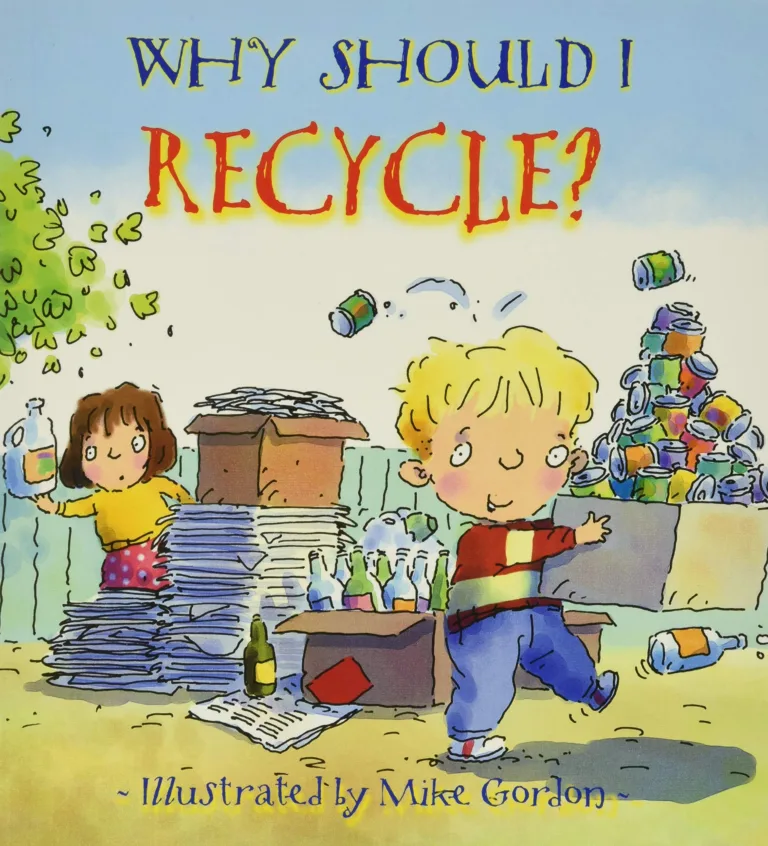
- Why Should I Recycle by Jen Green
- Age-appropriate recycled materials (e.g., tin foil, paper bags, plastic bottles donated by families)
- 3 Large bins (each labeled with an image of metal, paper, or plastic)
Instructions:
- To prepare for this activity, place the book Why Should I Recycle by Jen Green and Our Emotions Cards in the circle time area. Gather the age-appropriate recycled materials and large bins, and place them in an open area in the classroom.
- To introduce this activity, read the book Why Should I Recycle by Jen Green to the class. Pause on each page and engage children in a discussion about what they see. Prompt children to choose an Our Emotions Card to discuss what they feel about the garbage illustrations on each page. Use prompts such as:
- I see garbage everywhere! What would you feel if you saw garbage all over the ground? Can you pick an Our Emotions Card that shows that emotion?
- The little girl is jumping on the garbage can because it is so full of trash! I see that her eyebrows are turned downward and she does not look very happy. Which Our Emotions Card shows what she might be feeling?
- Mr. Jones is teaching the children about recycling. Recycling is a big word! Let’s try and say it together.
- Recycling is important because it helps keep our Earth clean. When we recycle, it helps keep the garbage from piling up in our trash cans.
- After reading the book, guide the children to the activity area. Support children in identifying each type of material. Use prompts such as:
- What materials do you see in our pile? I see paper bags, plastic bottles, tin foil, and lots of other items!
- Paper is normally thin. Let’s all take turns feeling the paper. What does it feel like?
- This bottle is made out of plastic. We can use our hands to change the shape of the plastic bottle. What happens when I squeeze the plastic bottle?
- This material is metal. Metal is very hard and we cannot use our hands to change its shape.
- To continue this activity, support children in placing each item in the appropriate recycling bin, ensuring that each child has a turn. Use prompts such as:
- This bin has a picture of metal. What type of materials do you think that we should put in this recycling bin?
- What about the recycling bin that has a picture of paper? What types of materials should we put in that recycling bin?
- This is a paper bag. Let’s find the bin to put our paper recycling in. Which bin has a picture of paper on it?
- Is this tin foil made of paper or metal? Which bin should we put the can in?
- This is a plastic bottle. Which bin has a picture of plastic on it? Let’s put the plastic bottle in the plastic bin!
- What do you feel when you recycle? Recycling makes me feel happy and proud because we are taking care of the Earth!
- To conclude this activity, reinforce learning by discussing other items that can be recycled. Use prompts such as:
- We learned all about recycling plastic, paper, and metal today. Did you know that we can also recycle clothes and toys?
- Everyday we grow bigger and stronger! When our clothes become too small, we can practice recycling by giving them to other friends who can wear them.
- We can also recycle our toys! When we get new toys, we can recycle our old toys by giving them to friends.
ECSEL Prompts
ECSEL Prompts are helpful questions & guiding statements you can use to provoke children’s thinking about emotions. These prompts are related to this specific activity.
I see that our friend has a frown on her face and her eyebrows are turned downward. Do you think she is feeling sad or angry?
The boy on this page has a big smile and is very happy! Let’s all practice our happy faces!
Uh-oh! I see that one of our friends is crying because someone took her plastic bottle. What can we do to help our friend feel better?
We are being kind to the Earth when we recycle!
Extended Learning
Use these questions & ideas to extend children’s learning!
To extend children’s thinking, start recycling in your classroom. Help children identify items that can be recycled such as old markers, styrofoam plates, plastic cups, etc. Keep a classroom recycling bin to fill up each week.
Start a recycling school drive! Support children in collecting recyclable materials from classrooms each week. Guide children in identifying and sorting the materials into the appropriate recycling bins.
Transform your dramatic play center into a recycling facility. Support children in identifying items in the dramatic play center that can be recycled. Provide the children with recycling bins to sort the materials.
Toddler – Recycled Materials Sorting