There is an old saying that used to infuriate me when I was younger, and it infuriates me still. Children should be seen and not heard.
The saying is older than most people realize. It appears in a collection of homilies written by an English clergyman around 1450, and it was not written about children at all. “A mayde schuld be seen, but not herd.” It was written about young women, who were expected to stay silent in company. Over the centuries it widened to take in every child, but its purpose never changed. It has always been a sentence about keeping someone quiet.
I have spent more than thirty-five years as a clinical psychologist, working with young children and the adults around them. I would put that saying the other way around. Children are meant to be heard. They are meant to be seen. They are meant to be given a voice. There is no more important experience, at any age, than to feel understood and known.
Listening with your eyes
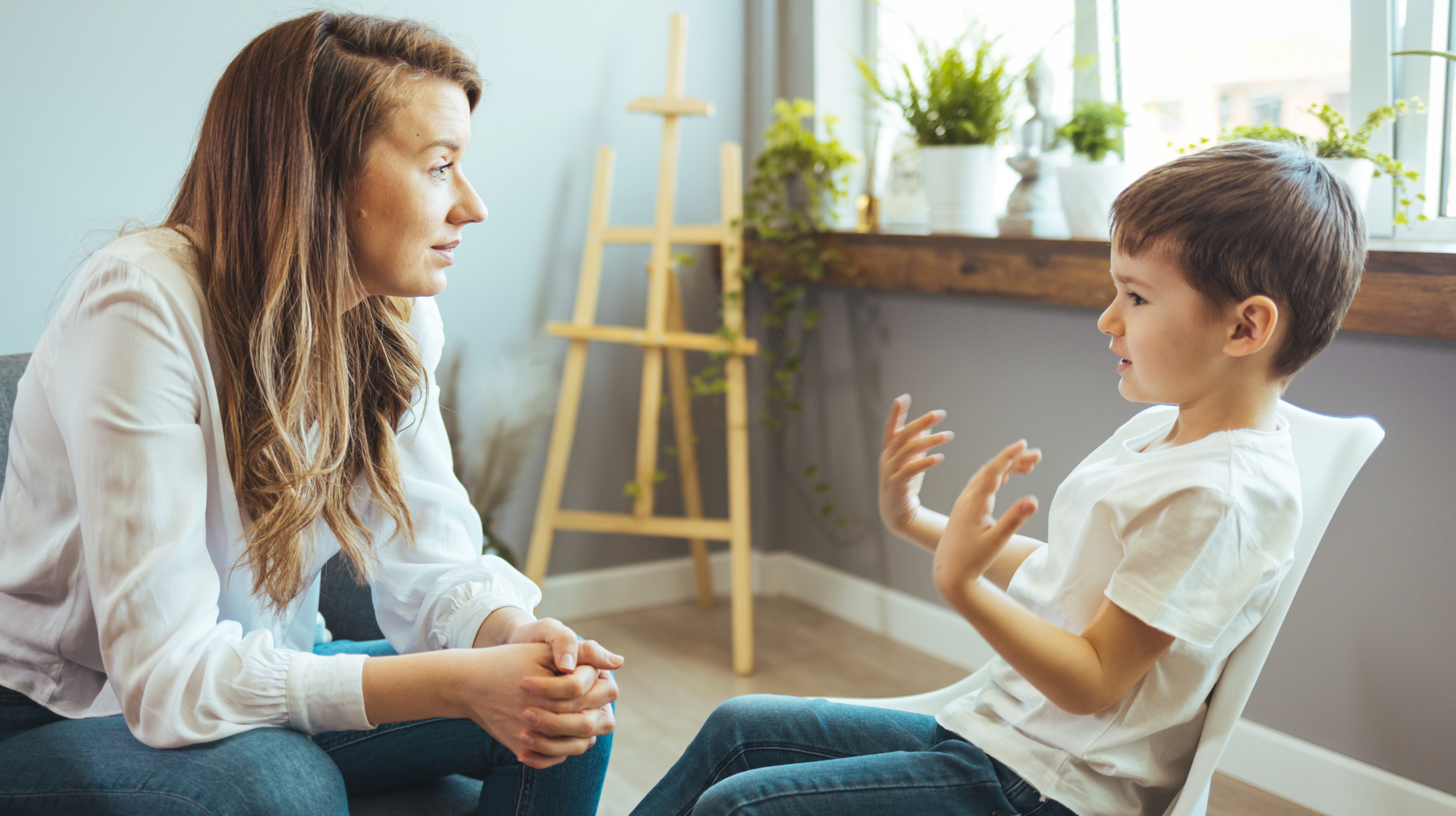
When I talk about listening to a child, I do not only mean with your ears. I mean with your eyes. I mean getting down to where the child is and letting her in. A young child is communicating long before she has words: in her face, in her body, in her play, in the way she reaches for you or turns away. When we really listen to a child, we learn so much about her world and what is going on inside it.
Listening also does something no instruction can do. In a relationship, the adult becomes a kind of mirror. When I reflect back to a child what I see, “you seem so frustrated with that tower,” or “that was a kind thing you did, and look how happy it made her,” I am giving her information she cannot get any other way: what her feelings look like, what her actions mean, and what impact they have on the people around her. Without that reflection, how would she ever know?
What being heard builds
The Center on the Developing Child at Harvard University calls this exchange serve and return: “when an infant or young child babbles, gestures, or cries, and an adult responds with eye contact, words, or a hug,” that back-and-forth is building and strengthening the neural connections of the developing brain. The child serves. The adult returns. Brain architecture gets built, one exchange at a time.
The research on how adults meet children’s feelings points the same way. Psychologist John Gottman and colleagues have spent decades studying what they call emotion coaching: treating a child’s hard feelings as opportunities for closeness and teaching, rather than something to ignore or hurry past. Children met this way show stronger emotion regulation, fewer behavioral and emotional difficulties, higher self-esteem, and higher academic achievement. And being heard is more than good practice. It is a child’s right in international law: Article 12 of the UN Convention on the Rights of the Child obliges its signatories to ensure that every child capable of forming her own views can express them freely, a principle UNICEF describes as foundational to the entire Convention. Being heard is developmental infrastructure for a child, as real as nutrition or sleep.
The leaders who bring this work into their programs notice the same grounding. “It’s based on research, but it’s also steeped in evidence and that’s really important,” says Aruna Gilbert, Chief Program and Policy Officer at the Early Learning Coalition of Palm Beach County. “Not a lot of things in the early learning space really come together with evidence and research, so that sets it apart.”
“You’re fine”
Every adult has said it. The cup spills, the tower falls, the tears arrive, and we say, with love and in a hurry, “You’re fine. Up you get.” We mean it as comfort. What the child takes in is that whatever she is feeling is not worth anyone’s attention.
I watched teachers learn the alternative in the schools we partner with. Instead of dismissing children’s feelings or trying to minimize them, the teachers began welcoming them, helping children open up and share what was happening inside. The children loved it, and they talked and talked. The teachers gave children language for what they had been communicating through action alone, so a child could say “I’m angry” or “I’m frustrated” instead of showing us with her fists. And once children could recognize feelings in themselves, they began to recognize them in each other. What stays with me is the babies: little ones toddling across the play space to hug a crying friend, or tapping a shoulder with a caring gaze and asking, in their way, you okay?
That is what a room full of heard children looks like.
The educators see it too. “I see them showing more empathy,” says Claire McNally, Vice President of programs at Ellis Early Learning. “I see them not only recognizing their own feelings, but also recognizing those of others. It has made such a big impact.”
The child’s first teacher
Parents then told those same teachers that something had shifted at home. Conversations that used to explode, or get buried, had become solvable, because the child could put her feelings into words and the parent could answer in kind. I often remind educators that the parent is the child’s first teacher. The teacher sees what happens at school, the parent sees everything else, and the child needs the two of them talking to each other. A child who is heard in one place learns she can be heard everywhere. It travels home in her.
The quiet return of an old saying
I think about that fifteenth-century sentence when I watch how easily a screen can slip into the moments where listening used to happen. A voice assistant will answer a child’s question about monsters at bedtime without ever noticing that she is scared. I have written about the one question every adult should be asking before AI enters a child’s life, and it applies here with full force, because a device can answer a child, but it cannot know one. Used well, technology can carry information into a childhood. Connection has to come first, and connection begins with being heard. When we let the machine do the hearing, the old rule slips quietly back into the house: the child is seen, and something else does the listening.
So this week, when a big feeling arrives in a little one, try the opposite of the old saying. Get down to her level. Look. Name what you see, and wait. You will be building the architecture her learning stands on, and you will be giving her the experience that matters most at every age: to feel understood and known.
Frequently asked questions
What does it mean to really listen to a young child? Listening to a young child means attending with your eyes as well as your ears: getting down to the child’s level, noticing what her face, body, and play are expressing, and reflecting back what you see so she can begin to understand her own feelings and the impact they have on others.
Where does “children should be seen and not heard” come from? The phrase appears in an English collection of homilies from around 1450, and it originally referred to young women rather than children: “A mayde schuld be seen, but not herd.” It later widened to all children, but from the beginning it was an instruction to stay silent.
Does validating a child’s feelings spoil the child? No. Acknowledging a feeling is different from granting a demand. An adult can say “you are angry that the game ended” while still holding the limit. Research on emotion coaching shows that children whose feelings are acknowledged develop stronger self-regulation and fewer behavioral difficulties, which is the opposite of spoiling.
What is emotion coaching? Emotion coaching is an approach studied by psychologist John Gottman in which adults treat a child’s negative emotions as opportunities for closeness and teaching: noticing the feeling, naming it, and helping the child understand and manage what is driving it, rather than ignoring it or hurrying past it.
How do you listen to a child who cannot talk yet? Through serve and return. An infant serves with babbles, gestures, cries, and gaze, and the adult returns with eye contact, words, and touch. Harvard’s Center on the Developing Child describes this back-and-forth as the interaction that builds and strengthens neural connections in the developing brain.