In this blog, you see a parent and educator’s perspective on raising resilient kids through play-based learning. You will also find simple ways to build resilience in children, activities for each age from infants to second grade, eight games for kids and students, and five steps for teaching resilience with games.
As a parent of two, and an educator of over 15 years working with every age group from babies through high schoolers, I have come to realize that though my education journey started with the intent of teaching high schoolers to love literature and writing as much as I did, it ended with something more basic.
It didn’t matter to me if my own children were smart, or tall, or good-looking. I wanted them to be resilient. I realized I wanted to help all children, not just the ones living in my house, become resilient.
In this blog, you will find:
- What Is Resilience?
- How to Build Resilience in Children
- How Do I Ensure Kids Have Opportunities to Develop Resiliency?
- How Early Can I Start Introducing Play-Based Learning to Children?
- What Are Best Practices for Building Resiliency Through Play-Based Learning for Young Kids?
- Resilience Activities for Kids, by Age
- Resilience Games for Kids and Students
What Is Resilience?
Resilience is the ability to keep trying even when something is hard. It’s the ability to keep jogging along when things go wrong. It’s the ability to problem-solve and persevere and get gritty. It is one characteristic shared by most superheroes and protagonists. And it is one of the top indicators of success—academic and otherwise.
Watch a Ted Talk by Angela Lee Duckworth, University of Pennsylvania,
speaking on the importance of traits like grit and perseverance
I would love to say I was able to positively impact all my students, but it isn’t true. A lot of my top-performing students would likely have been successful whether or not they ended up in my 11th grade College- Prep English Literature course. I may have contributed to them continuing to thrive, but many of them were already on a pathway to success. Why? Because of resilience.
Some students were more likely to be successful at almost anything they focused their efforts on due to the resiliency built up throughout their infancy, toddlerhood, and preschool years. A large part of that has to do with how the adults closest to them helped to socialize and responded to moments of frustration or disappointment, and whether they had enough opportunities to practice their resiliency skills.
Related: Learn about Resilience and Trauma-Informed Care
How to Build Resilience in Children
Resilience is built over time. As you read above, it grows through infancy, toddlerhood, and the preschool years, shaped by how the adults closest to children respond to frustration and disappointment, and by how many chances children get to practice. That is good news: every spilled cup, lost game, and fallen tower is a chance to practice. Here is what helps most, at home and in the classroom.
- Build a warm, responsive relationship. Children grow within responsive relationships with trusted adults, and they look to those adults to learn what to do when things go wrong. A calm, caring presence tells a child, “You are safe, and you can try again.”
- Let children try, struggle, and try again. It is hard to watch children struggle, and it is tempting to step in. But no one succeeds at every turn, and protecting children from every disappointment can do more harm than good. Offer just enough help for them to keep going, then step back.
- Name and accept every feeling. It is normal and healthy to feel sad, angry, or disappointed after a setback. Help children put a name to what they feel, because once a feeling can be named, it becomes much easier to manage. All emotions are okay; what matters is what we do with them.
- Calm first, then teach. When big feelings take over, the thinking part of the brain cannot do its job, so problem solving has to wait. Breathe together, use a calm voice, and offer a hug or a quiet space. Over time, children learn to reach for these strategies on their own.
- Practice problem solving. Once a child is calm, ask, “What happened? What could we try?” Offer two choices to children who need more support, and let others brainstorm their own ideas. Every problem children help solve builds the confidence to face the next one.
- Model it yourself. Children are emotional detectives, and they watch how we handle our own frustration. Say it out loud: “I am feeling so frustrated right now. I need to take three deep breaths before I try again.” When we stay calm and flexible as plans change, children learn that they can too.
- Praise effort, not just results. Notice when children keep going, and name it: “You kept trying, even when it was hard!” Step 5 below has more examples. Celebrating the process teaches children that mistakes are part of learning, not a reason to give up.
Play is one of the best places to practice all of this, because the stakes are low and children want to try again. The rest of this guide shows how, with play based practices, resilience activities for each age, eight resilience games, and five steps for teaching resilience with games.
How Do I Ensure Kids Have Opportunities to Develop Resiliency?
Caregivers and teachers alike can increase opportunities for children to develop resiliency by increasing opportunities where kids have intrinsic motivation to try again when they fail. This is through play.
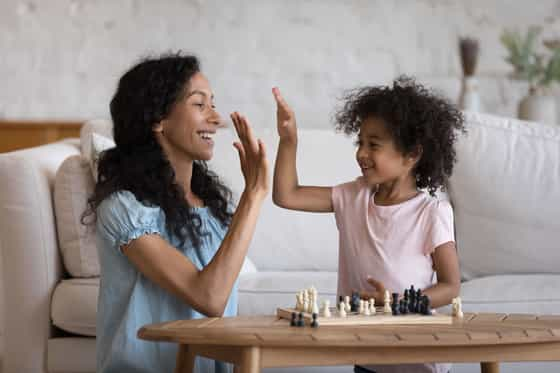
Even if my four-year-old fails 10 times in a row while trying to defeat a level in a cooperative board game he will not spend even a minute of his time complaining or crying about not succeeding. Feelings of sadness or anger are easier to overcome when he is focused on playing.
When you introduce play with socialization, adults have the power to shape a child’s resiliency through the way they respond or choose not to respond. The way adults respond to children in moments of distress, failure, or disappointment makes a huge difference in how they deal with these moments on their own in the future.
Related: The Power of Play: Building Young Children’s Resilience, Healthy Development, and Learning
How Early Can I Start Introducing Play-Based Learning to Children?
According to Dr. Jack Shonkoff, Professor of Child Health and Development and Director of the Center on the Developing Child at Harvard University, Play-Based Learning begins in infancy.
Listen to the full podcast at Harvard.edu.
Simple actions like making eye contact, smiling, cooing, and passing items are ways babies and adults can use play to begin building resilience in children. For a baby, actively exploring, being curious, trying new things, and observing the reactions that result from what they try are all ways for them to play.

As babies grow older, resilience becomes more obvious in children attempting to crawl to grab a toy, walk after falling down, or repeat a word to get the attention of an adult.
Caregivers and adults can build resilience in children by offering encouragement through positive interaction (e.g., clapping, cheering, wiggling a toy, or calling a child’s name) and creating safe environments (e.g., creating routine, demonstrating that falling on a cushioned play mat isn’t painful, or responding with empathy and understand by feelings children may be feeling.)
What Are Best Practices for Building Resiliency Through Play-Based Learning for Young Kids?
Use Tangible Objects and Simple Prompts for Imaginative Play
Young children do a great deal of learning through sensory exploration. This helps them to feel empowered to play their own way by manipulating sensory materials.
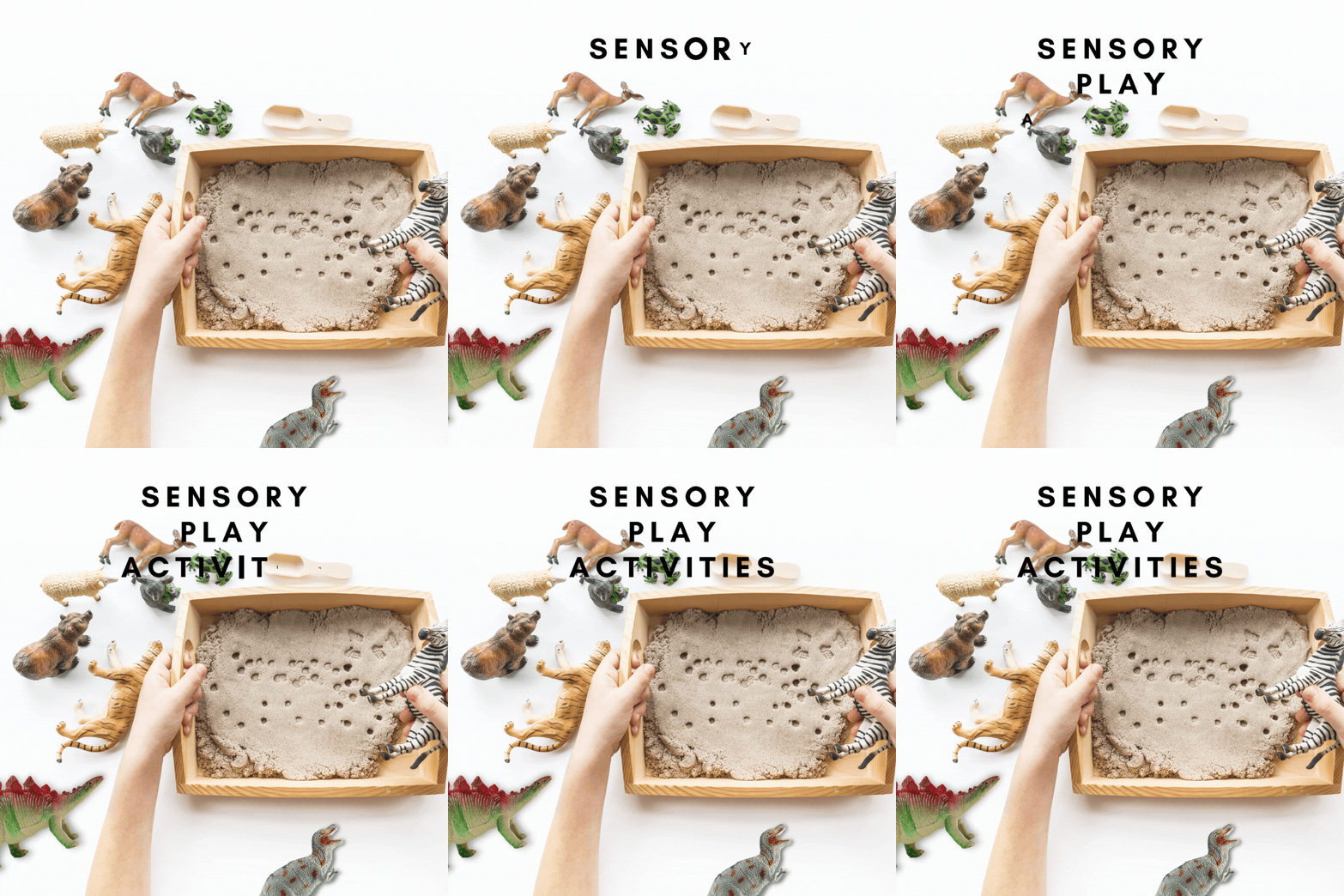
Creating a sensory box based on a theme, such as dinosaurs and prehistoric plants in a sandbox, or plastic ocean bath toys in a gelatin tub are great ways to get kids started. But the sensory items alone are only a piece of the puzzle. Adults can respond to children as they play by highlighting problem-solving opportunities for children to explore.
You can say:
| “Oh no, Trixie the Triceratops can’t reach the fruit on the top of the tree! What do you think she could do? Could she ask someone tall for help? Can you show me a tall dinosaur?” |
This helps build resiliency by having the child take part in solving a problem. Rather than giving up, we are helping to develop the child’s problem-solving skills by finding a solution. By having the child participate in the solution, they will be better prepared to tackle problems they may face in their own lives, like asking a tall adult to help when they can’t reach a flower in a tree or a book off a shelf.
Use Puppets or Stuffed Animals to Mentally Plan for Overwhelming Situations
Sometimes children feel scared about situations they don’t have experience with, such as being in a new place, meeting a new person, or trying a new experience. This can feel overwhelming.
Like a dress rehearsal for a show or practice for a speech, kids need practice to know what to expect, as well! They also need opportunities to get it wrong without scary consequences.

Puppets or stuffed animals are great versatile, comforting tools to help children practice new experiences. Maybe kids will be going to the movie theater for the first time, and they can help the stuffed animals go to the movie theater at home, first! Let them practice, risk-free, in the consequences that might occur if you don’t go to the restroom first, or if you are too loud during the movie.
Possible Prompts:
- “What could happen if we don’t go to the bathroom before we sit down? Let’s act it out! Let’s pretend Hemmy and Shemmy went to the theater, but Hemmy didn’t using the bathroom before sitting down.”
- “What might people feel or do if we make a lot of noise while watching the movie? You can pretend to be Hemmy, trying to enjoy the movie, and I’ll pretend to be Shemmy, making a lot of noise. Let’s see what happens.”
- “Now that we have an idea what the movie theater might be like, what do you think our movie plan steps should be?”
You can even use puppets or stuffed animals to revisit a conflict situation that occurred to help children practice better choices for next time. When my daughter was 4, she used to pinch her little brother rather than using her words. We would use puppets to practice words we could say instead of using our bodies to try to solve problems.
Resilience Activities for Kids, by Age
Resilience looks different at every age. A baby practices it by reaching for a toy again and again; a second grader practices it by erasing a mistake and starting over. Most of the activities below come from our ECSEL Curriculum Library, a collection of activities for infants through preschool created by teachers. In each one, your job is the same: stay close, name the feelings that come up, and encourage children to try again.
Infants
- Build it, knock it down, build it again. Stack soft blocks together, taking turns, then knock the tower down and start over. If a tower falls before a baby is ready, name the feeling and rebuild together: “Are you feeling sad because it fell over? That’s okay! Let’s build it back up together.”
- Hide and find. Push a toy car halfway into a paper tunnel and let babies search for it. Celebrate when they find it, and play again. If they get frustrated, search together: “Let’s look inside the tunnel together!” Peekaboo with a blanket or scarf works the same way.
- Roll and try again. Roll a ball or a toy car back and forth. When it rolls too far, help babies move to get it and try again, cheering them on as they go.
Even before babies have words, you can name their feelings for them. Our Emotions Cards, made for infants and up, let you show a picture of the feeling you are naming.
Toddlers
- Offer a just right challenge. Set out materials like clothespins and craft sticks, recycled boxes, or play dough, and let toddlers work at something a little hard. When they get stuck, name it and offer help without taking over: “When I keep trying and trying to do something, it makes me feel frustrated. Is that how you are feeling? Would you like some help?”
- Take a break, then try again. Some activities, like melting colorful ice cubes with warm hands, take patience. When toddlers want to give up, show them that a short break helps: “Let’s take a break to warm up our hands and then try again. I’ll help.”
- Shake it out. Movement songs help toddlers notice what their bodies do when they feel happy, sad, angry, or scared, and how they can “shake it out” to feel better when their feelings get too big.
Our Emotions Board, made for toddlers and up, lets children show you how they feel during the day, so you can notice when a feeling changes.
Preschoolers
- Talk about disappointment. At circle time, ask children to raise their hands if they have ever lost a game, waited for a turn and did not get one, or looked forward to something that did not happen. Talk about how those moments feel, then list together what helps, like taking a deep breath, getting a hug, or talking about it. Practice the ideas as a group so they are ready when a real disappointment comes.
- Fill your emotional tank. Draw a gas tank and an “emotional tank.” Talk about what empties our tanks and leaves us feeling sad, angry, or frustrated, and what fills them back up. Hang the class list of tank fillers on the wall as a reminder.
- Practice calming down before you need it. Make a calm down kit with a calm down bottle, a squeeze or fidget toy, a comfort item, and a homemade feelings book. When children are calm, practice with one item each day and role play common situations. Our free Calm Down Kit printables show what to include, plus book lists for tough topics.
- Solve problems together. When a conflict comes up, walk through the MakePeace process: calm your body, talk about the problem, share what you feel, listen to understand, brainstorm, choose the best plan, share what you feel now, and follow through. Sharing feelings again near the end shows children that our feelings change, and that prickly feelings don’t last forever. Download the free MakePeace Kit for a poster of the steps, a Calming Choice Chart, and breathing strategies.
Kindergarten to Second Grade
In our ECSELent Adventures curriculum for kindergarten to second grade, students practice skills like these:
- Handle mistakes. Talk through healthy ways to handle a mistake, such as erasing, correcting, or starting over, so students have a plan before frustration hits.
- Stay flexible when plans change. Practice asking for suggestions, thinking of other ideas, and adapting to unexpected changes.
- Use relaxation techniques. Teach a few relaxation techniques and practice them when students are calm, so they are ready when they need them.
- Talk through scenarios. The ECSELent Adventures scenario cards show Hemmy, Shemmy, and their friends in everyday situations children can relate to, which gives students a safe way to talk through a setback before it happens to them.
Resilience Games for Kids and Students
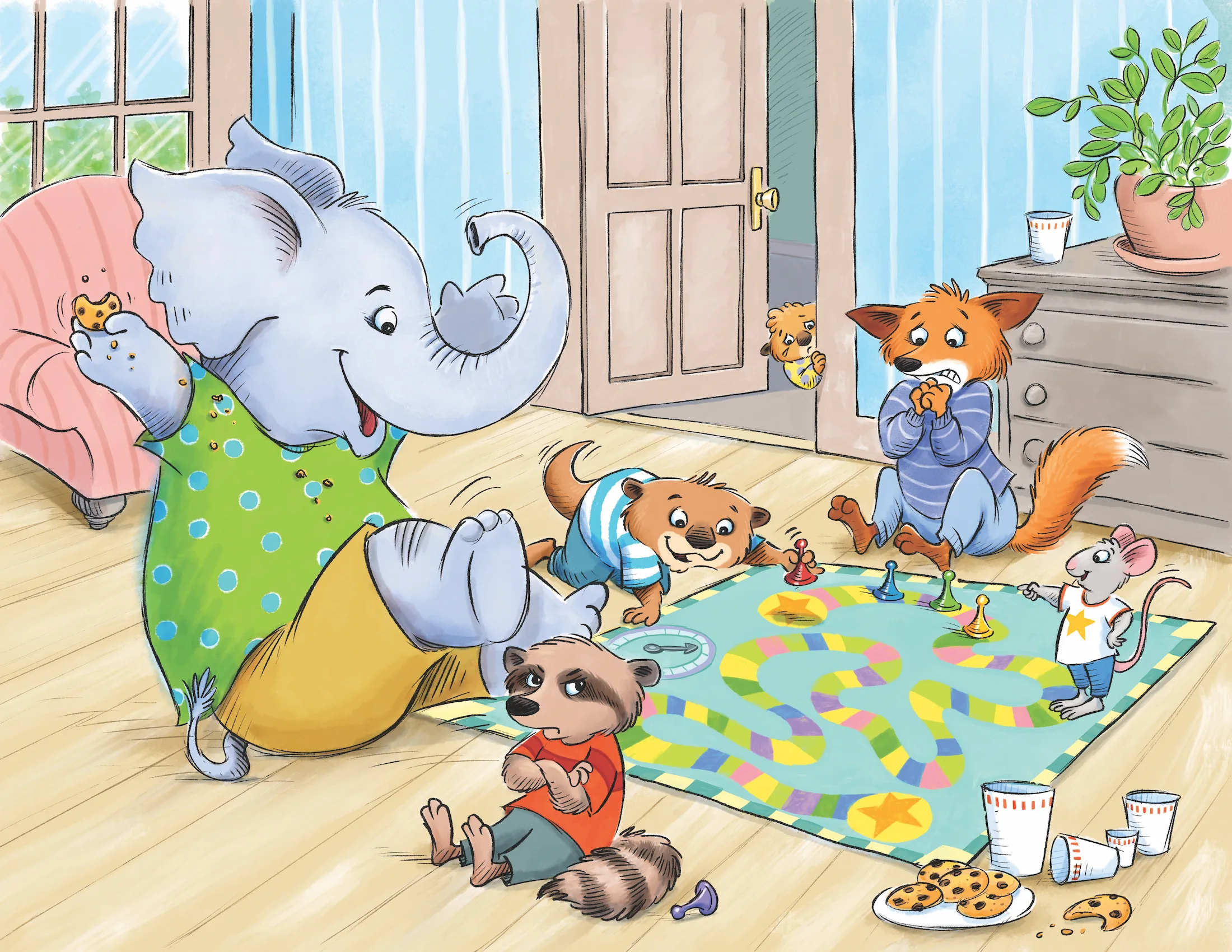
Board games and social games are a wonderful way to help kids grow their resilience. With younger kids, playing cooperative games is best, because you win and lose as a group.
Losing, waiting for a turn, and starting over are all part of the fun, so games let children practice how to bounce back from frustration and disappointment when the stakes are low. By facing obstacles in games, children learn perseverance, strategy, and adaptability. The eight games below work well with preschoolers, with notes on adapting several of them for younger children and older students.
1. Cooperative Board Games
In a cooperative game, players work together against the game instead of against each other. Losing together is easier to handle, and it keeps children trying level after level. Before you start, talk about how it might feel to lose and what you can do when that happens. Once children have practiced, older students can move on to games with winners and losers.
2. Dinosaur BINGO
Children make their own BINGO boards by gluing small dinosaur pictures into a grid, then play together. Before the first round, tell children that not everyone will get BINGO first, and practice taking deep breaths for when they feel sad or upset. During the game, coach the hard moments: “I can see tears in your eyes. It’s okay that you haven’t gotten to mark off a dinosaur yet. Let’s take some deep breaths so we can keep playing together.” Then invite everyone to show the winner that they feel proud of them.
3. Classroom Board Game With Pause Cards
Turn the floor into a giant game board with painters’ tape, and have children roll a large foam die to move along the path. Add “PAUSE” spaces with a calming strategy, such as “take 3 big belly breaths,” and spaces with Our Emotions Cards, where children name or act out the feeling they land on. To make it more challenging, add spaces like “STUCK: skip your next turn” or “Move back 3 spaces,” which give everyone a chance to handle a letdown. When a child is disappointed, say, “It’s okay to feel this way! What is something we can do to help you feel better and continue the game?” The library version, the Cultural Classroom Board Game, adds facts about countries around the world.
4. Musical Freeze Dance
Play music, let children dance, and call out “Freeze!” when the music stops. To make it harder, call out words that sound like freeze, such as “please,” “cheese,” or “sneeze.” Freeze Dance builds impulse control, and it gives children an easy, low stakes way to get it wrong and try again: “Whoops, not everyone froze. Let’s try again… freeze! Much better!” Toddlers can play a simpler version, each child dancing on their own spot marked with tape.
5. Teamwork Towers
In small groups, children agree on something to build, like a tower, a building, or a vehicle, and take turns adding one block each. Towers fall and teammates disagree, and those moments are the practice. When frustration rises, pause: “I can see that you’re starting to feel frustrated. How about we all pause and take two deep breaths? Then we can figure out what to do next.” Afterward, talk about what we can do when a tower gets knocked over or a teammate isn’t listening.
6. Teamwork Obstacle Course
Set up cones with a challenge at each one, like moving a bean bag to the next cone using only your elbows, or carrying a beach ball between two partners standing back to back. Each group finishes its task before the next group starts, so children practice waiting, communicating, and finding a plan that works. Ask, “What do you think is the best plan to move the ball to the next cone?” and “Does everyone agree with this plan?”
7. What’s That Sound?
Hide a few instruments or noisy objects in a box. Children turn around and close their eyes while you make a sound, then guess what made it. Guessing games give children a safe way to be wrong: “I can see that you are frowning and have your arms crossed. Are you feeling disappointed about not making the right prediction? That’s okay, we can always try again!”
8. Emotions Charades
Children take turns picking a card from Our Emotions Cards and acting out the feeling without words while everyone else guesses. Acting out frustration, disappointment, or worry when nothing is wrong builds the feelings vocabulary children need to cope when those feelings are real. Younger children can start by copying the faces on the cards.
Games 2 to 8 are lessons in our ECSEL Curriculum Library, with full materials lists and prompts (game 6 is listed there as the Team Building Obstacle Course).
Related: Great Emotional Regulation Games for Kids
Below are some tried and true steps you can take to help kids learn resilience from structured social activities, such as games.
Steps for Teaching Resilience With Games
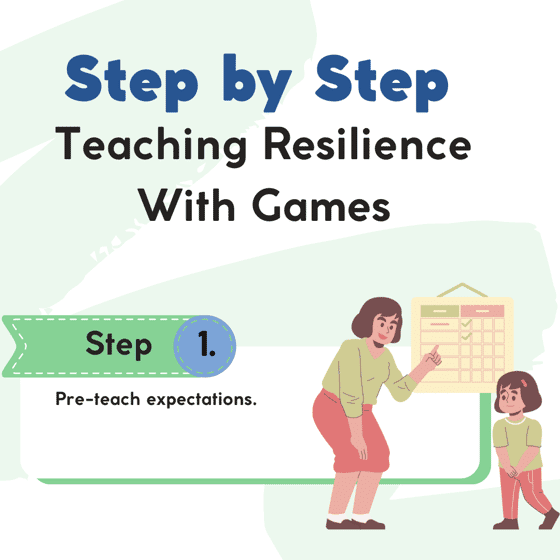
🖨️ Download Step by Step: Teaching Resilience With Games PDF
Step 1- Pre-teach Expectations.
Before playing, let kids know that losing can be part of the fun. When we lose, we will lose as a group, but the fun of a game is knowing that sometimes we win, and sometimes we lose, but we can get better. Verbalize what feelings may occur, and what appropriate and inappropriate reactions may be.
When talking about losing a game, you can say:
| “Sometimes when I lose, I get angry. But when I’m angry, do you think it’s okay for me to throw the pieces? No. That could hurt someone. Do you think it’s okay for me to scream? No. That might hurt people’s ears. When I’m angry, I like to take some space away from the game, drink some cold water, or take a deep breath. What can you do to help yourself feel calm?” |
When talking about winning a game, you can say:
| “Sometimes when I win, I get excited. But even if I’m excited, do you think it’s okay for me to say mean things to the people who didn’t win? No. That might hurt their feelings. Do you think it’s okay for me to run around screaming? No. That can hurt people’s ears. A safe way for me to show I’m excited is by sharing my feelings. I can say ‘Yay, I did it! I feel proud!’ I can give my friends a hug, or high-five other people and tell them ‘good game!’ Let’s practice safe ways to show we are excited!” |
Step 2- Acknowledge and accept all emotions as valid.
It is normal and healthy to be sad, angry, or disappointed when we lose, or excited and proud when we win. It is important that we help children label their emotions and accept their emotions using a calm, neutral tone.
You can say:
| “Wow, that was a loud noise, and I saw you cross your arms. Are you angry because we lost? That’s okay. I’m here if you want to talk about those feelings.” |
Or
| “Wow, that is a lot of screaming and running around. Are you excited that we won? It feels so good when we win a game, and you can let me know with your words!” |
Step 3- Help co-regulate strong emotions.
Strong emotions may occur during play, whether it is over winning or losing, feelings regarding rules, or boo-boos. Before any teaching can occur, the child must first calm down. When the brain feels strong emotions, it cannot learn and process information. Older or advanced children may be able to regulate on their own, but many young children will need guidance on what they can do to calm down. Part of this might be offering regulation strategies or tools, or even pre-teaching regulation techniques like taking deep breaths or space away from the game before play begins.
Step 4- Provide safe and kind ways to express emotions.
While all emotions are normal and healthy, we can still help build traits such as resilience, kindness, and humility through the way we respond to children’s behavior.
You can say:
| “I get that you are angry that we lost. I feel angry about losing, sometimes, too. But throwing things or hitting is never okay. Now that you are calm, let’s think about some safe ways we can express our anger the next time we feel angry.” |
Or
| “I can see that you are excited about winning. I’m excited, too. But when you scream, you might hurt people’s ears. Next time we are excited, we can pat our back or high-five. Do you want to try them out with me to see which one you like better?” |
Step 5- Be sure to acknowledge what children did well and encourage them to keep trying.
Part of building resilience is through modeling and feedback of desired language and behavior.
You can say:
| “I loved how even though it was hard, you kept trying all the way to the end!” |
Or
| “I loved how you shared kind words with your friend to encourage and help them! Thank you for being a good friend.” |
⬇️ Comment below on how you’ve helped young kids build resilience, or how you’ve used play when teaching resiliency.