Emergent curriculum is an approach to early childhood curriculum in which teachers plan activities and projects from what they observe in their group of children: their interests, needs, skills, and feelings. Instead of following a plan set in advance, the teacher acts as a facilitator, and learning grows and changes as the children do.
If you are an educator, you may notice some unwelcome changes in your classroom at different times of the year: restlessness, dysregulation, children feeling “over it,” and teachers just trying to get through the day. It can be a challenge to get children to focus on curriculum and learning, especially if educators are also feeling burnt out. So, why not let children take the lead?
With emergent curriculum, children play an active role in what they are learning, and educators can use children’s interests to create activities that also weave in opportunities to develop important emotional, self-regulation, and problem-solving skills.
This blog breaks down what emergent curriculum is, why it is important, the benefits of using it in early childhood education, as well as techniques, tools, and tips to help you integrate emotional intelligence (EI) into your everyday curriculum activities. Keep reading for guidelines for creating your very own emergent curriculum, a worked lesson plan example built with our free planning set, and activity examples for infants, toddlers, and preschoolers!
In this blog, you will find:
- What is Emergent Curriculum?
- Why Choose Emergent Curriculum for Early Childhood Education?
- How to Integrate Emotional Intelligence Into Emergent Curriculum Activities
- Emotional Intelligence Tools & Techniques for Implementing Emergent Curriculum
- How to Plan Your Own Emergent Curriculum
- Emergent Curriculum Lesson Plan Example
- Emergent Curriculum Examples by Age
What is Emergent Curriculum?
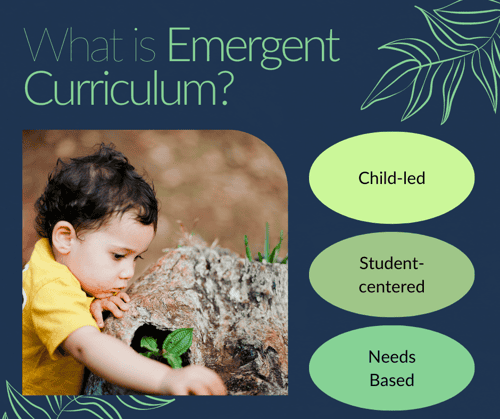
Emergent curriculum means planning activities and projects based on the specific needs, skills, and interests of a group of children. Curriculum activities and ideas can look different each year as every child has different needs, interests, ideas, and skills, and every group of children works together in different ways.
Emergent curriculum planning is done by observing the classroom during different parts of the day and using them to create meaningful learning opportunities based on children’s real-life experiences and interests.
Observations can include:
- watching what toys and materials children are drawn to or choose to play with,
- what imaginative play scenarios they engage in – both on their own and together with peers,
- what games and activities they participate in while outside on the playground,
- what they talk about with their friends during lunchtime,
- what they share during circle time, and even
- what they are struggling with and what they excel at.
This goes beyond structured and planned activities. Incorporating children’s interests into the materials that go into each classroom center ensures that children are engaged throughout the day during choice time and free play.
This doesn’t have to break the bank, either! In fact, utilizing materials that you already have, including recycled materials, nature items, and loose parts can create an open-ended learning area that draws children in to build or create their own ideas, which can also inform your own ideas for curriculum planning.
Why Choose Emergent Curriculum for Early Childhood Education?
Different curriculum models have their benefits, but emergent curriculum allows children to take the lead and have agency in the learning process, which makes them more likely to engage with and better understand new content. When you introduce children to learning this way from their earliest years, you foster a sense of ownership and responsibility in them when it comes to learning and trying new things, which will lead to increased independence and motivation.
Emergent curriculum means that the learning experiences grow and change as the children do. This flexibility means it can be responsive to current events and issues, allowing for relevant and meaningful learning experiences. Emergent curriculum also encourages creativity and critical thinking skills by allowing children to explore and pursue their own ideas with your guidance as needed.
How to Integrate Emotional Intelligence Into Emergent Curriculum Activities
Topics & Themes
As children learn, changing emotions are bound to emerge, just like their interests. Incorporating emotional intelligence within emergent curriculum activities helps children develop important life skills such as empathy, problem-solving, and self-regulation, while also fostering their natural curiosity and love of learning.
If you aren’t sure where to start when it comes to incorporating emotional intelligence or emotional, cognitive, and social early learning (ECSEL) skills into your curriculum, make them the star of the show! Children love to talk about their experiences and their feelings, especially when they are given ample opportunities to do so.
Planning emergent curriculum activities around themes like friendship, sharing, kindness, or learning about our many different feelings opens a world of possibilities for building these skills in engaging ways. Here are some examples of activities that fit under the umbrella topic of EI and focus on different learning areas:
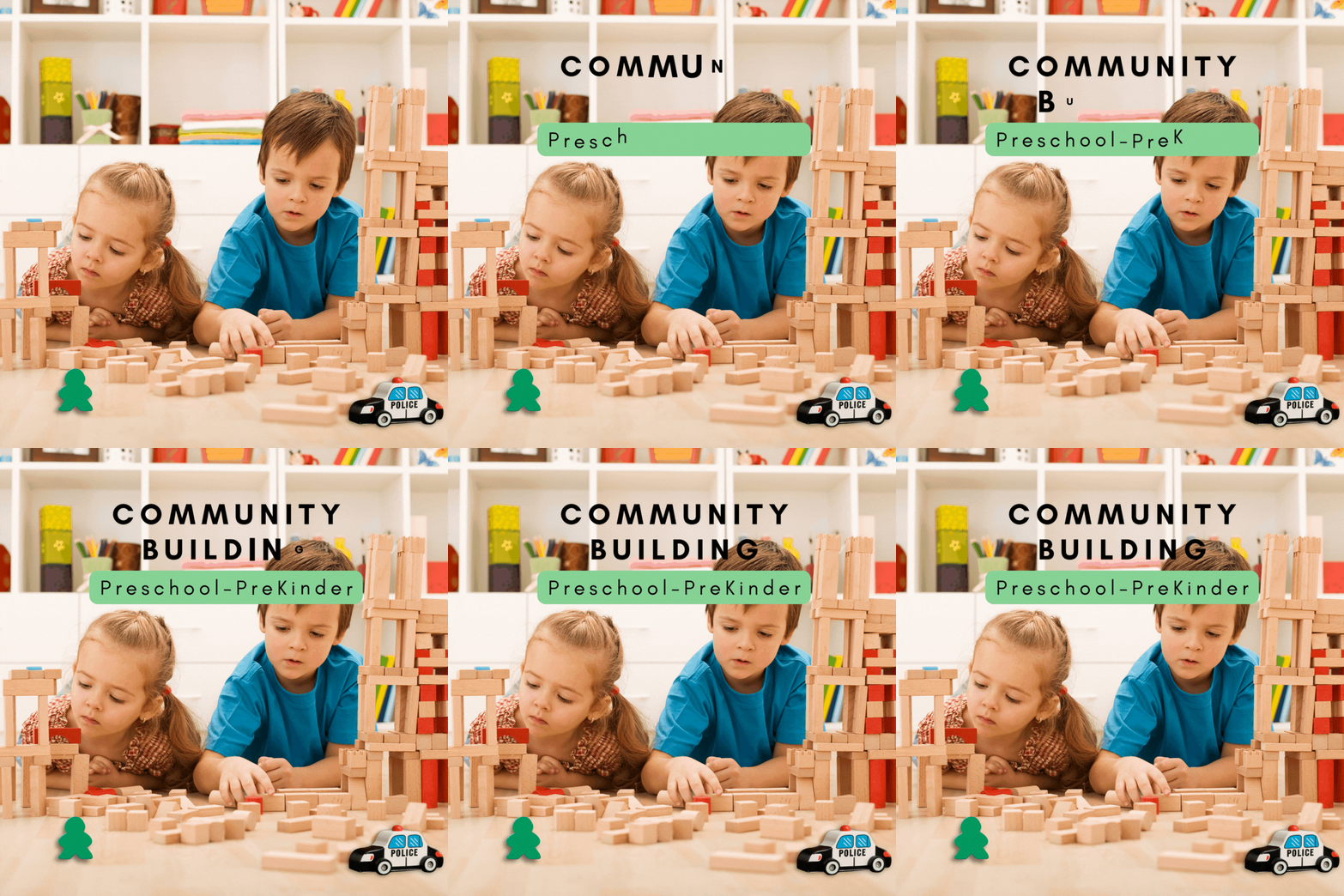
Community Building – With this hands-on engineering activity, part of the fun is for children to work together, share, take turns, and problem-solve to create their very own community. What will your children include in their community?

Friendship Silhouettes – Friendship cannot be measured in inches or feet. However, this fun measurement activity will bring children together in a collaborative environment where they can practice sharing, communicating with others, and listening all while practicing their critical thinking, numeracy, and fine motor skills.

Teamwork Alphabet – Let’s build the alphabet…with our bodies! This fun movement and literacy activity gives children opportunities to work together, communicate, and problem-solve to create the different letters of the alphabet using their bodies.
Questions & Prompts for Implementing Emergent Curriculum
Planning activities intentionally around EI isn’t the only way you can support children in developing EI skills. No matter what activity you have planned, you can model, guide, and respond to children in ways that help them think critically about what they are doing, how it affects others, and what they are feeling.
You can do this by asking open-ended questions and guiding prompts throughout the activity experience. For example, you can model the connection between art and feelings while prompting emotional identification by saying:
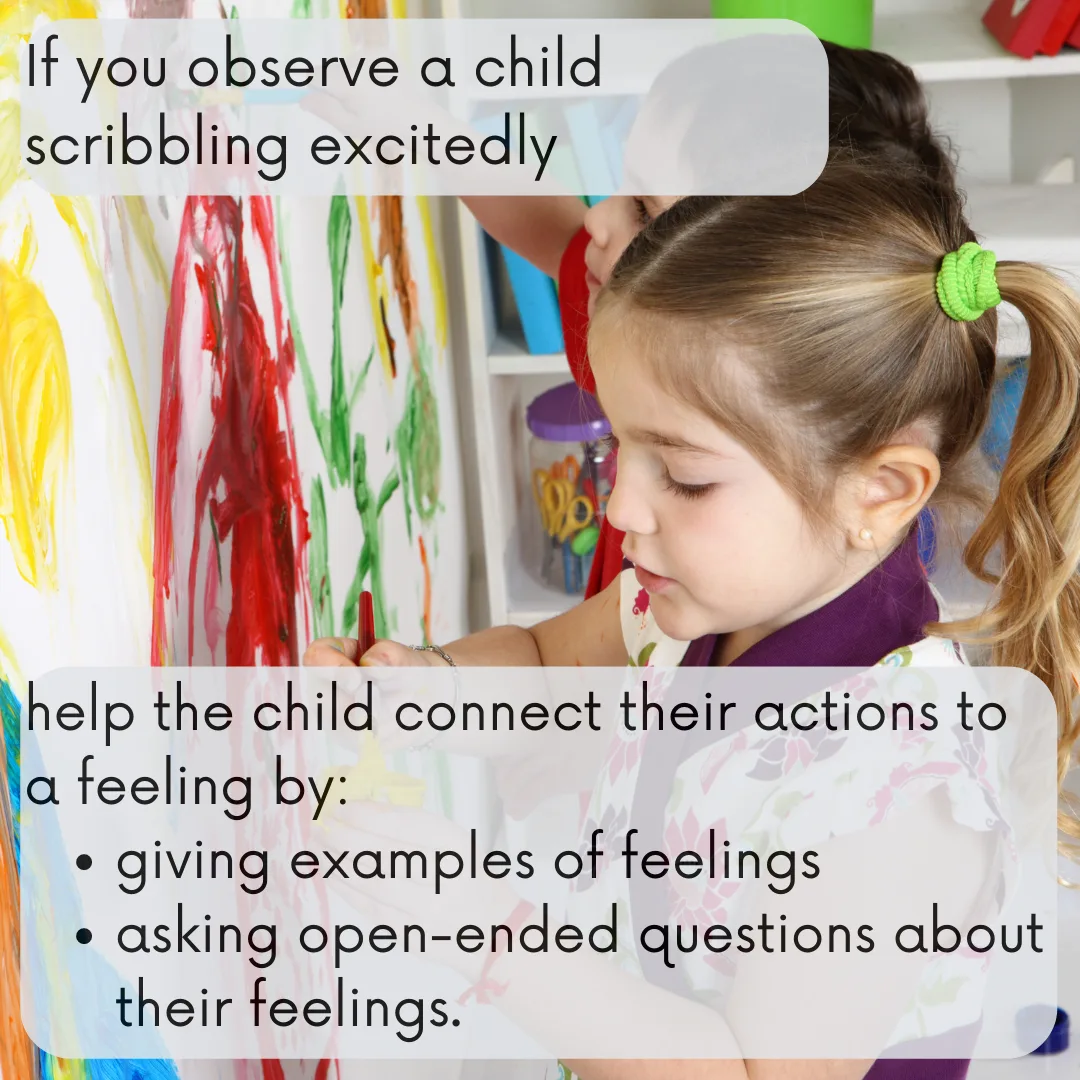
| “Wow! You are using so many bright colors, and I can see you are moving the markers back and forth really fast. When I look at your art, it reminds me of feeling excited. What are you feeling right now? What does your art make you feel?” |
You can acknowledge any prickly emotions that may naturally arise during activities while guiding children to identify helpers and problem-solving strategies by saying:
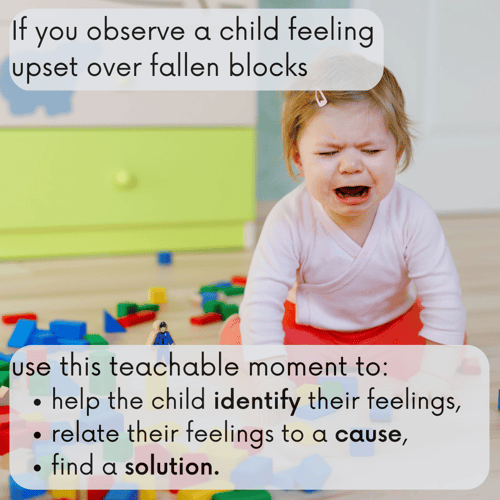
| “Oh no, the structure fell over. I can see that is making you feel angry and disappointed. Is there anyone at the table who can help you build it up again? What pieces do we need to help fix it?” |
You can even directly tie in curriculum content to relate back to children’s own emotions and feelings:
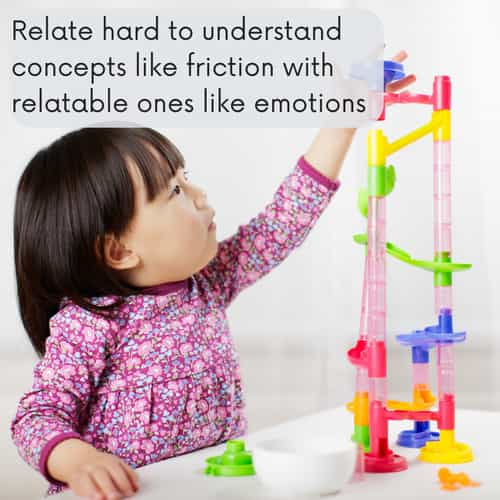
| “The block is moving slower than the ball down the ramp because of friction. That means that when the block rubs against the ramp, the force in the opposite direction causes it to move slower. Sometimes, when I’m nervous about trying something new, it feels like I get stuck, and it takes me a little longer to get where I want to go – just like the block. Other times, I feel so excited to try new things that I can’t wait to get started, and there is nothing holding me back – just like the ball! Has anyone else ever felt that way before?” |
There are so many ways we can organically connect emotions to learning. As children play, explore, interact with others, and learn new things, they will have many different emotional experiences that can be acknowledged, validated, and worked through. After all, emotions are a big part of who we are!
Emotional Intelligence Tools & Techniques for Implementing Emergent Curriculum
In addition to activity content and questions, there are tools specifically created to help children (and adults!) learn to identify, understand, express, and regulate their emotions. We can use these tools to help us plan our activities and intentionally incorporate EI into our emergent curriculum.
Our Emotions Cards
Our Emotions Cards is a tool you can use as emotions arise and change organically during children’s learning and exploration to help them identify and understand their own emotions and those of others. They include 15 different emotions and feelings and a mirror card so children can see their own emotional expressions.
You can use Our Emotions Cards as part of your emergent curriculum planning process, or to encourage conversations and reflection about children’s emotions as they participate in different activities.
Ways to Use Our Emotions Cards to Plan Emergent Curriculum Activities
Step 1: Pay attention to patterns of emotions that arise
As you are observing children’s interests and needs you can incorporate learning about those feelings into your activities.
For example, you may notice children feeling frustrated after trying to do something over and over without it working out. Introduce this feeling with Our Emotions Cards and plan an activity that intentionally focuses on repeating a process and checking in with children’s feelings each step of the way or finding solutions to help them feel less frustrated.
Step 2: Observe what children feel during different parts of the day
Do they feel sad after saying goodbye to their parents in the morning? Angry when they have to share something they don’t want to? Nervous to participate in circle time?
Write down these observations and incorporate Our Emotions Cards into a storytelling activity about a character that experiences each of those same emotions. 🖨️Download Emergent Curriculum Planning Template
Ask children if they have ever felt these feelings before to give them the opportunity to connect to the story in their own ways. This activity can branch off into children creating their own emotion stories, acting them out with friends, reading different books about emotions, and so much more!
Ways to Use Our Emotions Cards During Emergent Curriculum Activities
Do you ever notice children feeling surprised or disappointed when they see the results of a science experiment? Do they feel excited to play a movement game with their friends? Or frustrated when their art project doesn’t look the way their friends’ project looks?
Don’t skip over these moments! They truly are incredible learning opportunities, and you can use Our Emotions Cards to help.
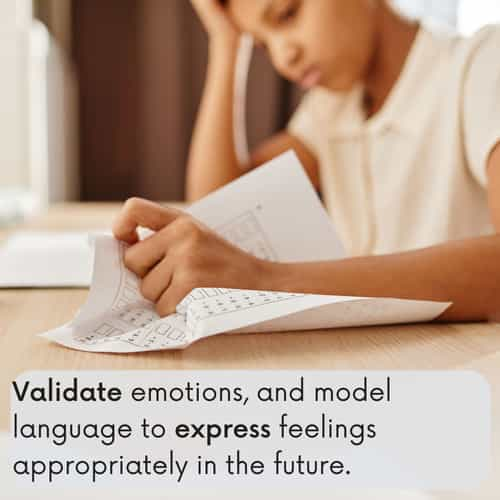
When these moments arise, use Our Emotions Cards to validate children’s emotions. You can then help give them the language to express these feelings when they happen in the future. For example:
| “I noticed that you crumpled your paper on the floor. It’s okay to feel frustrated! I feel that way sometimes, too. Can we find the card that matches your feeling? Yeah, that looks just like you right now. Let’s see if we can find a way to help you feel less frustrated. What can I do to help?” |
Regulation Strategies
Whether you’re having a blast and the excitement gets too big, something unexpected happens that causes anger, sadness, or disappointment to arise, or kids just need a break, having regulation strategies that work for you and your children can help strengthen their emotional intelligence skills while keeping your activity from derailing. There are many different ways to support children’s regulation while also taking into account their interests and needs!
Environmental Strategies
Some children may need sensory cues to help them begin to calm their bodies. To meet these children where they are, try dimming the lights, opening the windows, playing soothing music or sounds, or using a calm and quiet tone of voice to call attention to what you notice:
| “It’s a bit too loud in here and it’s hard for me to concentrate. Let’s take a few minutes to close our eyes and listen to the music before we continue the activity.” |
If children are feeling overstimulated, your message and strategy will help them feel heard in their dysregulated experience.
Movement Strategies
Do you have a class that seems to get easily distracted or needs frequent movement breaks?
✋Pausing an activity to “shake sillies out” or to re-energize sleepy kids with some stretches can be a helpful way to regulate children’s bodies and help them refocus their attention. Try some yoga poses related to animals they are interested in, or lead a round of head-shoulders-knees-and toes at different speeds to help get some energy out and bring it back down before continuing your activity.
You can also plan an emergent curriculum activity focused on regulation all on its own as a fun way to teach new strategies children can use at any time!
Deep Breathing
One of the most effective ways to support children’s emotional regulation is to practice deep breathing, both in heightened emotional moments and regulated moments. When children are upset or emotionally dysregulated, they are unable to access the executive function skills necessary for them to focus, pay attention, and concentrate on learning. Deep breathing physiologically regulates us and makes it easier to talk about our feelings or refocus our attention. However, that doesn’t mean it can’t be fun and related to what children want to learn about!
Incorporate children’s interests, movements, and sounds into deep breathing.
For example, try taking “ocean breaths” by moving your arms in an upward wave motion as you inhale, and a downward wave motion as you exhale.

Or try “butterfly breaths” by moving your arms up like wings as you inhale, and down as you exhale.
Invite children to think of the next movement to turn this into its own regulation activity or take a moment here and there to breathe deeply whenever children need it.
How to Plan Your Own Emergent Curriculum
If you’re still feeling stuck on where to start when it comes to your own emergent curriculum planning, you can use these guidelines to help you get started and stay on track!
Emergent Curriculum Planning Guidelines
Observing & Brainstorming
✍️ What are children interested in learning about? Take note of children’s likes, dislikes, and what ideas and materials they are drawn to during the week.
👂 Listen actively to children’s conversations. What experiences and feelings do they talk about?
💬 Comment on what you notice as children play and explore. Do they like reading about anything in particular? Do they choose to draw during free play? Are they working together to build towers and structures? Bring children into the planning process by brainstorming ideas as a class!
❓ Ask what children would like to learn about.
For older children, use thinking maps to write down their ideas. Expand on these ideas by asking guiding questions.
For younger children, scaffold their thinking by giving an example of something you would like to learn about. Then ask for their ideas and reaffirm what you hear. Be sure to write these ideas down.
Planning & Implementation
- What learning areas would you like to focus on? (e.g., STEAM, music, movement, dramatic play, literacy, emotional learning)
- What goals do you want children to work towards? (e.g., sharing, problem-solving, counting, fine motor skills, emotion identification)
- What materials would you like to use? (e.g., recycled materials, nature items, library books, blocks, dry-erase boards)
- Are you planning to use any EI tools or techniques? (e.g., Our Emotions Cards, books about feelings, regulation strategies)
- What guiding prompts and questions will you ask to encourage reflection and critical thinking?
The ECSEL Curriculum Library
When it comes to curriculum planning, we could all use a little help. It’s hard to constantly think of new ideas that align with children’s interests while also providing them with an enriching learning experience. The ECSEL Curriculum Library (ECL) is an amazing resource to help educators with just that.
Related: Try a free ECL lesson, now
When you visit the ECL, you will find hundreds of activities that cover different topics of interest, learning areas, and age groups. As a bonus, each and every activity in the ECL integrates emotional, cognitive, and social early learning (ECSEL), meaning no matter what activity you choose to do with children, there will be opportunities woven throughout to support their emotional development.
All you need to know is the topic that you would like to explore based on children’s interests, whether it be dinosaurs, community helpers, colors, farm animals, the ocean, or anything else. The ECL will show you activities within that topic that cover learning areas like STEAM, music, movement, dramatic play, literacy, and of course ECSEL.
Pick and choose the activities that you think will work best for your class, and you’re all set!
Emergent Curriculum Lesson Plan Example
What does emergent curriculum planning look like on paper? Here is one example, walked through the three forms in our free Emergent Curriculum Planning Set: Observation Notes, the Curriculum Planning Form, and Our Topics at a Glance. It is adapted from the sample pages that come with the set, which follow the Ladybug Room, a class of four year olds whose interest in the play kitchen grew into a topic called “Our Restaurant.” Use it as a model, then fill in the forms with what you notice in your own classroom.
Step 1: Observation Notes
Over one week, the teacher jots down what children do, say, and feel during play, social interactions, and conversations. The set offers two versions of this form: Option A gives you a space for each day of the week, and Option B adds guiding questions to help you summarize what you noticed. In this example, the notes show that:
- Many children head straight for the play kitchen during free play, and they often disagree about what to make there.
- One child plays with cars and says he needs to drive to the grocery store for food.
- Another child shares how she helped her mom make dinner at home.
- When the class talks about germs, a child asks, “How do germs spread?”
- One child is having a hard time managing her fear of germs, and another doesn’t like touching gooey things.
On the Option B summary, these notes become topics children like to talk about (germs, the kitchen, and making food), experiences they like to share (cooking with their families and going to the grocery store), materials they are drawn to (the play kitchen), and dislikes (gooey things). Notice that the notes capture feelings as well as interests. A worry about germs is just as useful for planning as a love of cooking.
Step 2: Curriculum Planning Form
After reviewing the notes, the teacher chooses a topic that most of the class is excited about and fills in the planning form:
- Topic: Our Restaurant.
- Why this topic: Most of the class has recently shown interest in the play kitchen.
- Possible directions: Foods from different cultures, food safety, and nutrition.
- Goal: Children will learn to work together and make decisions as a group for their restaurant.
- Content and skills to strengthen: Art (decorating the restaurant), math (counting money), motor skills (practicing cutting with a pretend knife), and emotional intelligence (communicating to make decisions together).
- How to bring in ECSEL: Talk about washing our hands properly and about foods from different cultures, and use Our Emotions Cards to name the feelings that come up along the way, such as worry about germs or frustration when the chefs disagree.
- What the teacher wants to learn: The foods children from different cultures may eat at home, and the money used in different countries.
Step 3: Our Topics at a Glance
Next, the teacher brainstorms activity ideas for each learning area on the Our Topics at a Glance page:
- Art: Make menus and signs for the restaurant, and make play dough food.
- Literacy: Read a book about worries and fears, and books about food and cultures.
- Dramatic play: Turn the dramatic play area into a restaurant, and explore the different roles in it.
- Math: Measure food, pay for food with play money, and count and sort vegetables.
- Science and technology: Learn about germs, with an experiment on how germs grow on a piece of bread.
- Engineering: Explore how a kitchen mixer works.
- Music and movement: Choose music to play at the restaurant, “drive” to the restaurant, and use a pretend knife to cut play dough food.
- ECSEL: Practice sharing ideas and taking turns, talk about fears around germs, and build social skills at the table.
Step 4: Turn It Into a Weekly Plan
With ideas for every learning area, the teacher fleshes out the full plan for the next week, two weeks, or month, depending on the planning schedule of the center or school. The sample pages in the set stop at Our Topics at a Glance, so here is one way the first week of “Our Restaurant” could look:
- Monday: Plan the restaurant together. At circle time, ask children what their restaurant needs and write their ideas on a thinking map. Then start making menus and signs in the art area.
- Tuesday: Talk about germs and worries. Read a book about worries and fears, then talk about germs and why we wash our hands. Invite children to find the card in Our Emotions Cards that matches how they feel about germs, and start the bread experiment in the science area.
- Wednesday: Open the restaurant. Set up the dramatic play area with the menus, play dough food, and music the children chose. When two chefs disagree about what to cook, name the feeling and guide them to solve the problem together: “I can see you both feel frustrated. How can we decide together?” If the excitement gets too big, pause for a few ocean breaths before you continue.
- Thursday: Count, sort, and pay. Count and sort vegetables, then pay for meals with play money. To explore foods and money from different cultures, try Global Grocery Store or Currencies Sort from the ECSEL Curriculum Library.
- Friday: Check the bread and reflect. Look at the bread experiment together and talk about what children see. Close the week by asking what they liked about their restaurant, what was hard, and what they want to add next.
At the end of the week, start a new page of Observation Notes. What children did, said, and felt in their restaurant will show you where the topic goes next: perhaps toward the foods their own families cook, a class grocery store, or a brand new interest. That cycle of observing, planning, and observing again is what keeps emergent curriculum growing with your children.
Download the free planning template: Our Emergent Curriculum Planning Set includes both versions of the Observation Notes, the Curriculum Planning Form, and Our Topics at a Glance, with step by step instructions, the sample pages this example is based on, and the full set in Spanish.
Emergent Curriculum Examples by Age
Emergent curriculum examples look different in every classroom, because each one starts with what a particular group of children notices and loves. For example, when children’s interests turn toward the outdoors, nature exploration is the perfect topic to begin incorporating their ideas and interests about bugs, trees, and plants as well as opportunities for EI skill development, and the ECL has many activities that cover everything you need.
Based on what your classroom is interested in, you can find creative ways to teach children about caring for the planet, connecting with ourselves and the nature around us, learning about what plants and flowers need to grow and thrive, and so much more.
Take a look at some of our favorite nature-themed ECSEL-integrated activities for infants, toddlers, preschoolers, Pre-K students, and beyond. You can use these activities as they are or as inspiration for your own emergent curriculum planning!
Infant
If you notice babies reaching for leaves, rocks, and bark on a walk, or watching shadows move across the floor, these two activities build on that interest.
Sensational Nature Exploration – Our youngest learners navigate the world around them through exploration. Bring them outdoors with this sensory science activity to observe and interact with what you see, bring the outdoors inside with you, and connect the experience to their emotions!

Nature Shadows Exploration – Explore technology in age-appropriate ways through the light of a projector! Find nature items and see the shadows the light creates! What do the different shapes and shadows make you feel?
Toddler
If you notice toddlers collecting treasures on walks, digging in soil, or sorting things into bins, try these four.

Earth Feelings Book – Foster empathy and kindness in children while exploring the outdoors. Then, create a nature-themed classroom resource for identifying different emotions!

Planting Our Cozy Feelings – Learn about new cozy feelings – excitement, calmness, and pride – by guiding children to plant seeds representing each feeling. Water the cozy feelings and watch them grow!
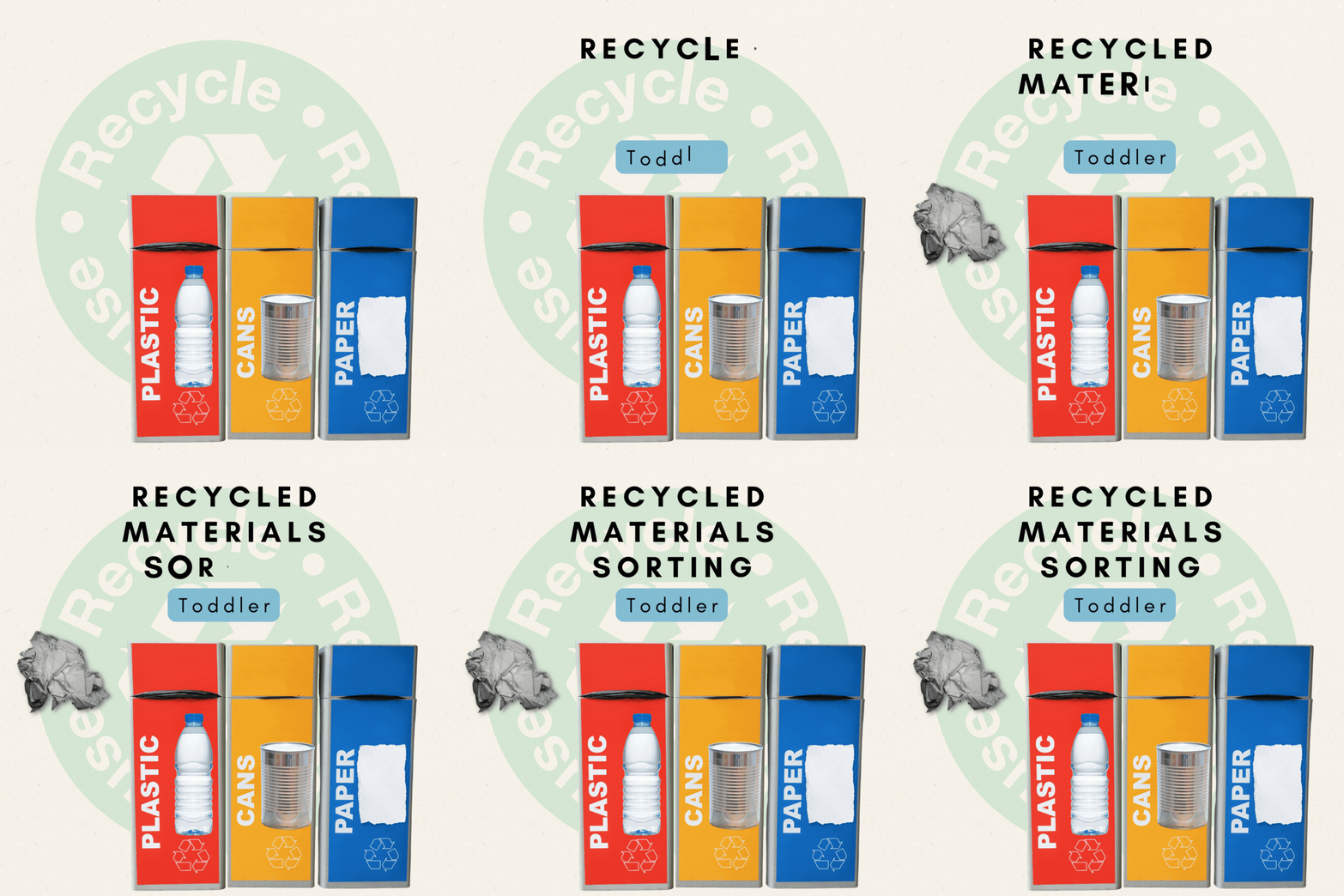
Recycled Materials Sorting – Introduce the importance of recycling while sorting recyclable materials in your classroom!
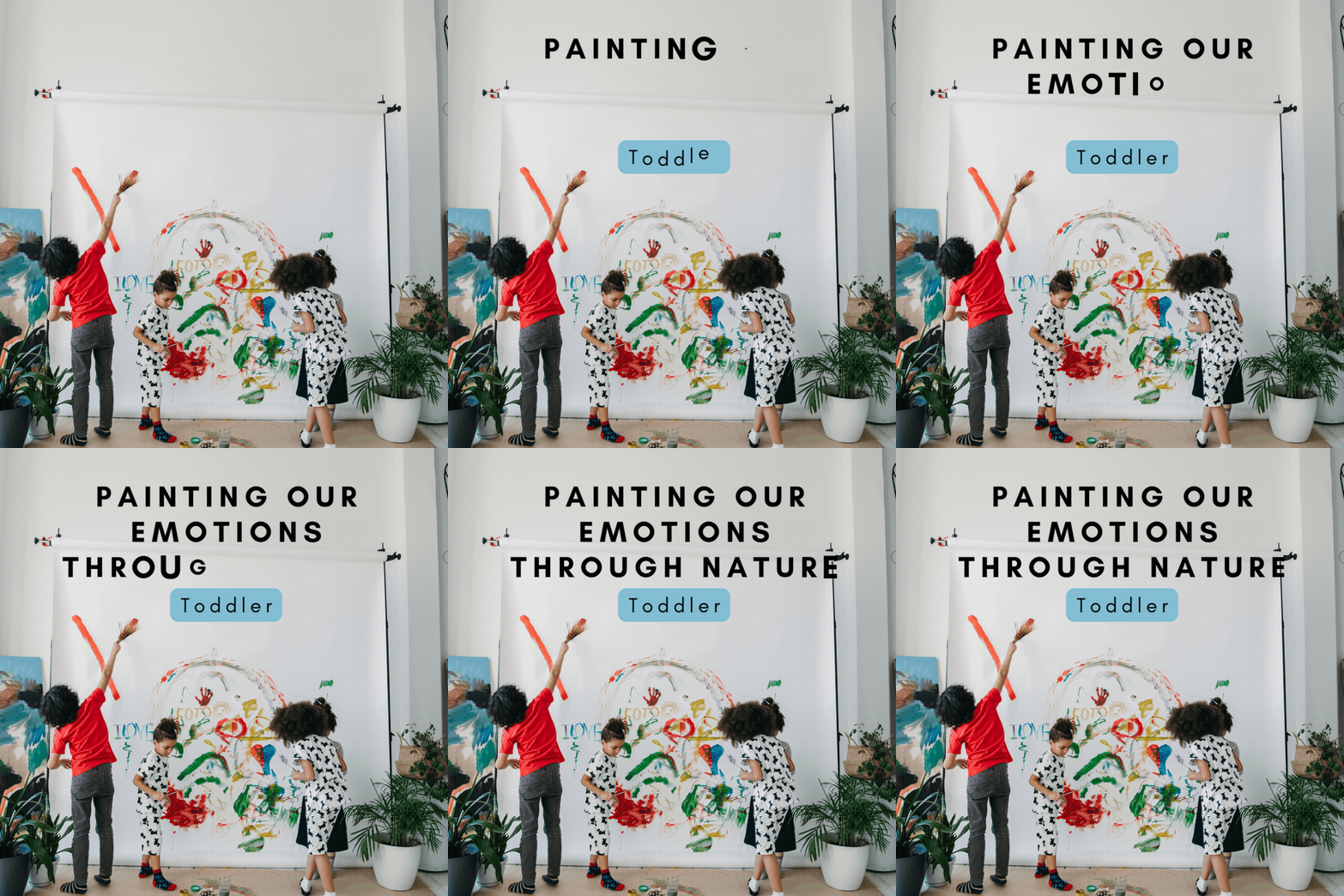
Painting Our Emotions Through Nature – Collect nature items as utensils and materials to create paintings of our many different emotions.
Preschool/Pre-K+
If you notice preschoolers asking how plants grow, making faces out of sticks and leaves, or sorting the classroom recycling, these four can grow from that curiosity.

From Seeds to Trees – Combine movement, regulation strategies, and nature together and you get this peaceful and informative activity. Keep this idea in your back pocket for any time children need a moment to stretch and refocus.
Mindfulness Nature Adventure – Practicing mindfulness can help us feel centered, more present, and more in touch with our feelings and emotions. What better way to feel more attuned with ourselves than by going out into nature? Guide children to channel their energy through their senses, express their feelings appropriately, and learn a regulation strategy with this calming mindfulness activity.
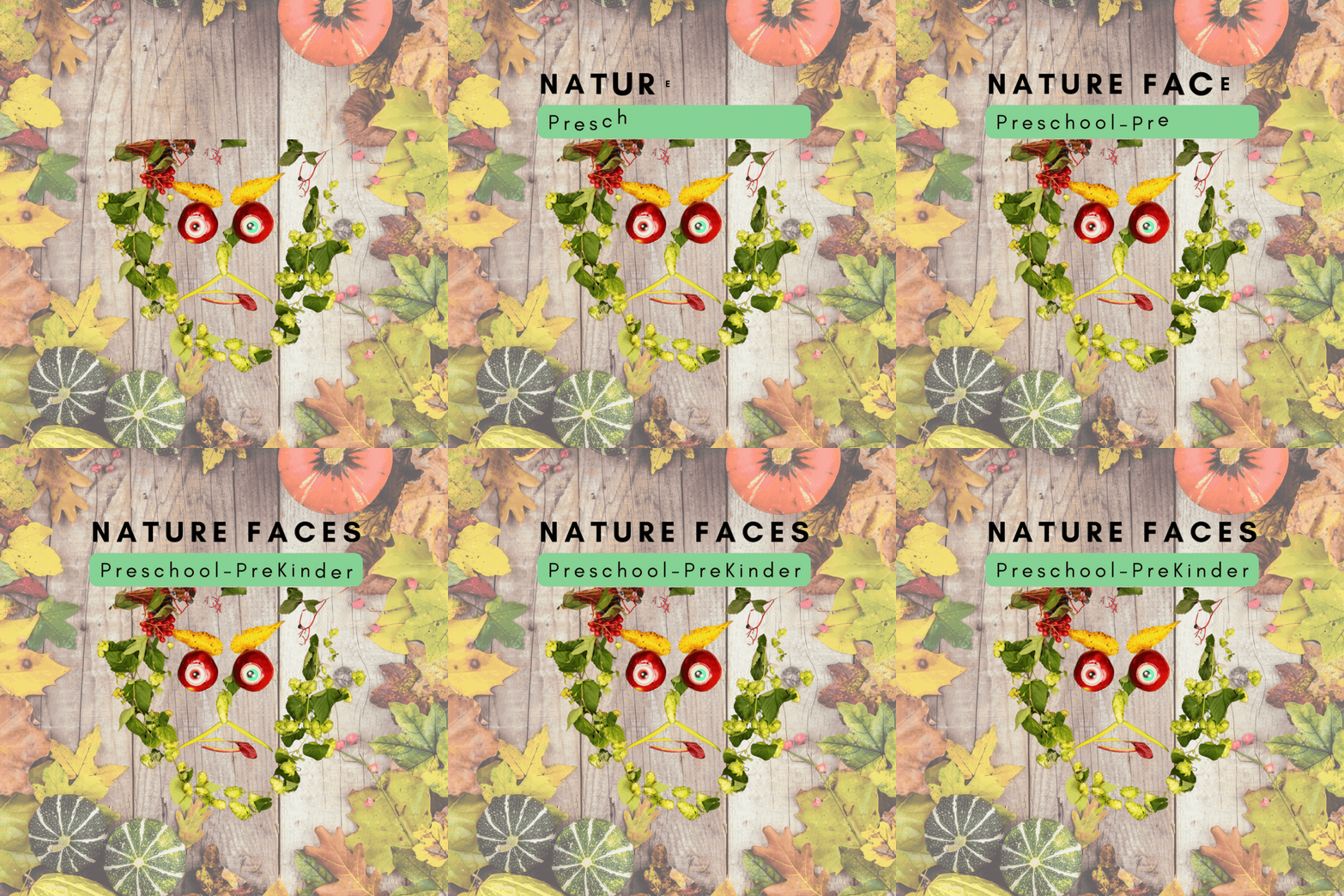
Nature Faces – Help children “branch” out with their emotional identification skills with this nature-themed activity!
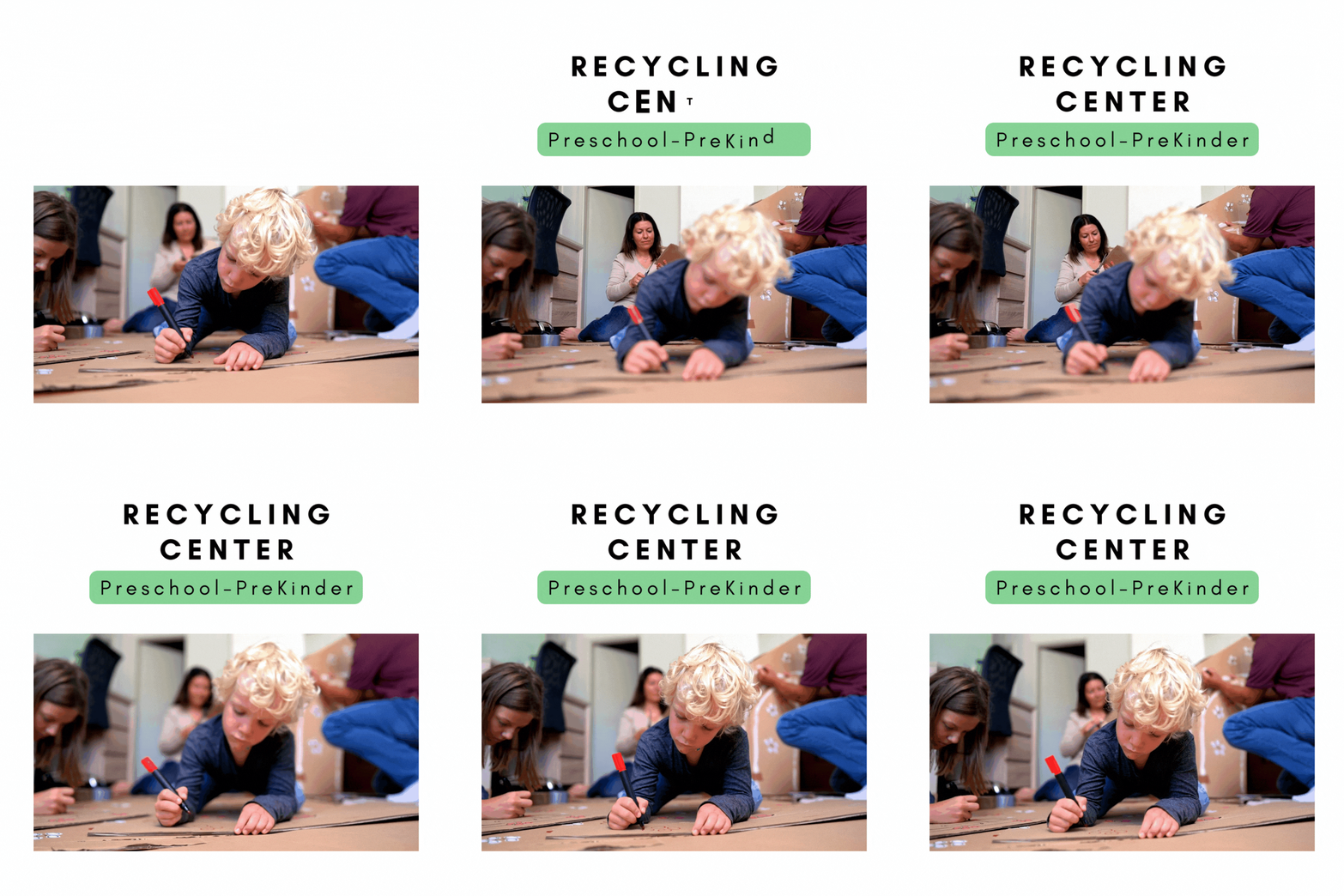
Recycling Center – Design and create a recycling center in your classroom using recycled materials! Make labels and sort recyclable items into the correct bins. How many stations do you need?