
In this article, you will find important information about how to talk to children about common tough topics, including shootings, death, racism, mental health, illness, divorce, and more. Also find a step-by-step guide with a free PDF printable handout for talking to kids about tough topics, in general, tips on trauma-informed care, and book lists to help guide children to exploring tough topics in an age-appropriate way. Whether you are a parent wondering how to talk to your child about difficult topics or a teacher supporting a whole class, each topic also includes a “What to Say” box with example phrases for infants and toddlers, preschoolers, and early elementary children.
- Why Talking About Tough Topics With Children is Important
- Tough Topics That Kids Might Bring Up
- 5 Steps for Talking to Children About Tough Topics
- Trauma-Informed Tips and Strategies
- Children’s Book Recommendations
Why Talking About Tough Topics with Children is Important
With so much going on in our world today, we may all be asking ourselves: What topics do we need to prepare to talk about with our kids?
Although the reality of this is heartbreaking, it is likely that many children are already being exposed to challenging and traumatizing topics, including gun violence related to school shootings, loss and death, racism and discrimination, and mental health crises, whether it be their own lived experiences or access to information via social media or the internet.
It can be scary to address these topics with kids, and it is natural to feel unprepared, but talking with children about tough topics is incredibly important.
As adults who play a significant role in children’s development, answering the difficult questions our children have and engaging in these tough conversations is part of our responsibility for their well-being.
It is also our responsibility to be on the lookout for signs of trauma that children may be dealing with without being able to let us know – changes in mood, bad dreams or night terrors, or even regressive behaviors like bedwetting. This is an understandably daunting task when you zoom out and realize just how much we are all navigating every day.
In this article, we will walk through some of the most challenging topics that children may bring up, offer age-appropriate tips for preschool and up, steps, ways to identify trauma in children, and strategies for navigating conversations about those topics, and provide children’s book recommendations and resources that can help make having these conversations a little bit easier.
Tough Topics That Kids Might Bring Up
Talking with kids about hard things looks different at every age, but the approach stays the same. Under each topic below, you will find a “What to Say” box with example phrases for infants and toddlers, preschoolers, and children in early elementary school. They are examples, not scripts, so put them in your own words. Start by finding out what your child already knows, and let their questions guide the conversation. Then notice and name the feeling, let them know that all feelings are okay, and keep your words simple, honest, and brief. Try to avoid promises like “It will be okay, you don’t need to be scared.” Instead, acknowledge the feeling and offer a way to cope together, such as taking three big belly breaths.
Talking to Kids About Gun Violence and School Shootings
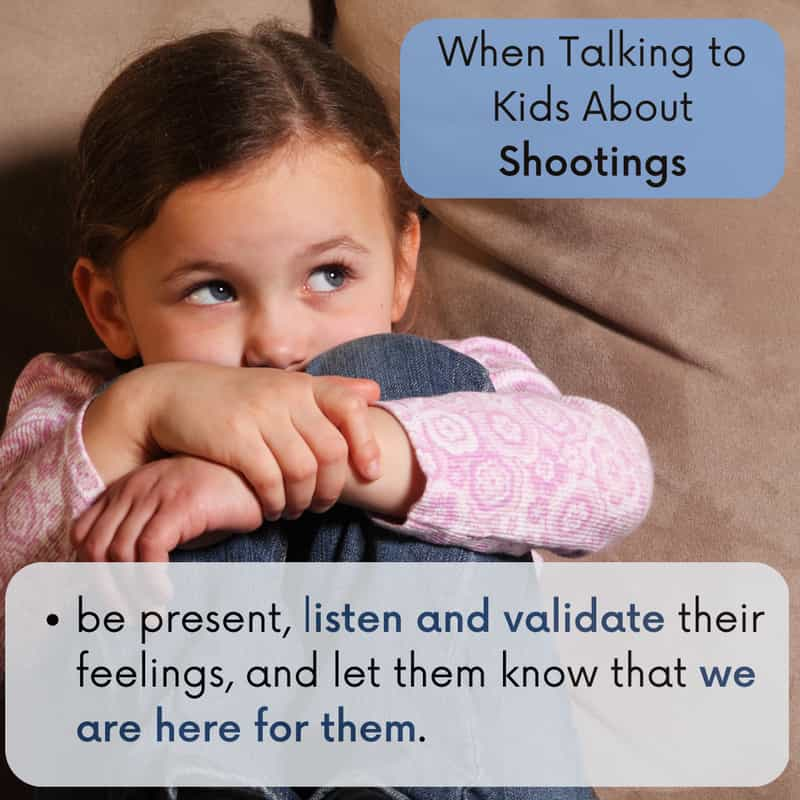
As of March 28, 2023, there have been 130 mass shootings in the United States in the year 2023 alone. Of these incidents, 13 have been school shootings. It is now commonplace in schools for students, teachers, and staff to participate in active shooter drills and lockdown procedures, which can be traumatizing for everyone involved.
In order to process the trauma, fear, and stress that can arise when it comes to school shootings, children may need to engage in art projects, writing, movement, or play-based scenarios to help them express their feelings. They may also find comfort in talking about it with their peers or asking parents and teachers questions.
⚠️ The most important thing we can do in these moments is to be present, listen and validate their feelings, and let them know that we are here for them.
Our children are not alone in feeling traumatized by the violence and looming fear of school shootings. Parents and caregivers are dealing with the fear and anxiety of sending their children to school without knowing if they will return home safely. Educators are going to work not knowing if they will be able to do the jobs they were hired to do or step in as a first responder if there is a lockdown. It is important to remember that carrying this much emotional stress is not something we are always equipped to do. It’s okay to not be okay and to seek out professional support during times when it feels like too much to handle on your own.
What to Say About Shootings and Scary News: Examples by Age
- Infants and toddlers: Babies and toddlers may not understand the news, but they sense our stress. Limit how much news they see and hear, keep your voice calm, keep routines steady, and offer lots of warm hugs. Use a few simple words: “You look scared. I’m right here with you.”
- Preschoolers: Ask what they heard, then keep your answer short and true: “What did you hear about? Sometimes things happen in the world that we don’t like, and they can make us feel scared or sad. It’s okay to feel scared. Keeping you safe is my job, and your teachers’ job too. You can always tell me how you feel.”
- Early elementary: Older children may hear more at school or online, so help them sort out where the information came from: “What have you heard, and where did you hear it? I feel sad and worried about it too, and your feelings make sense. Let’s look for the helpers together. If you have questions I can’t answer yet, we can find out together.” You can also ask, “What could we do to help?” Drawing a picture or writing a letter gives children a way to help, and that can feel empowering.
📖 Book Recommendations for Talking to Kids About Violence and Scary Times
Talking to Kids About Death
.png?quality=low&width=800&height=800&name=Talking%20to%20kids%20about%20death%20(1).png)
Grief is a complicated feeling that affects everyone differently, and sitting with the grief of losing someone or something close to us because they died is incredibly hard, even for adults.
For young children, death may seem too abstract for them to fully understand and process. They may ask, “When are they coming back? Why can’t we visit them anymore?” or grapple with the unfairness of losing someone they loved.
It can be challenging and distressing for adults who care for children to see them struggle with feelings of grief and loss and not know how to help.
⚠️ Some of the most important things we can do is to validate the feelings children are experiencing, allow them to feel them for as long as they need to, and remind children of the happy and cozy memories that they will always have to look back on and remember lost loved ones.
What to Say About Death: Examples by Age
- Infants and toddlers: Even very young children feel the sadness around them. Keep routines and cuddles close, and use short, clear words: “Grandpa died. We miss him. You feel sad, and I feel sad too.”
- Preschoolers: Use the word “died” instead of phrases like “went to sleep,” which can confuse young children, who may think death is temporary: “Grandpa died. That means we won’t see him anymore, and he isn’t coming back. You might feel sad, and that’s okay. Nothing you did made this happen. Would you like to look at pictures together and remember the happy times we had with him?”
- Early elementary: Children this age may wonder why it happened or say it isn’t fair. Answer honestly and briefly, and make room for every feeling: “It doesn’t feel fair, does it? It’s okay to feel sad, angry, or confused, and those feelings can come and go. In time the hurt will get smaller, and our memories of Grandpa will always stay with us. Would you like to draw a picture of him or tell me a story about him?”
📖Book Recommendations for Talking to Kids About Death
Talking to Kids About Exclusion, Racism, and Discrimination
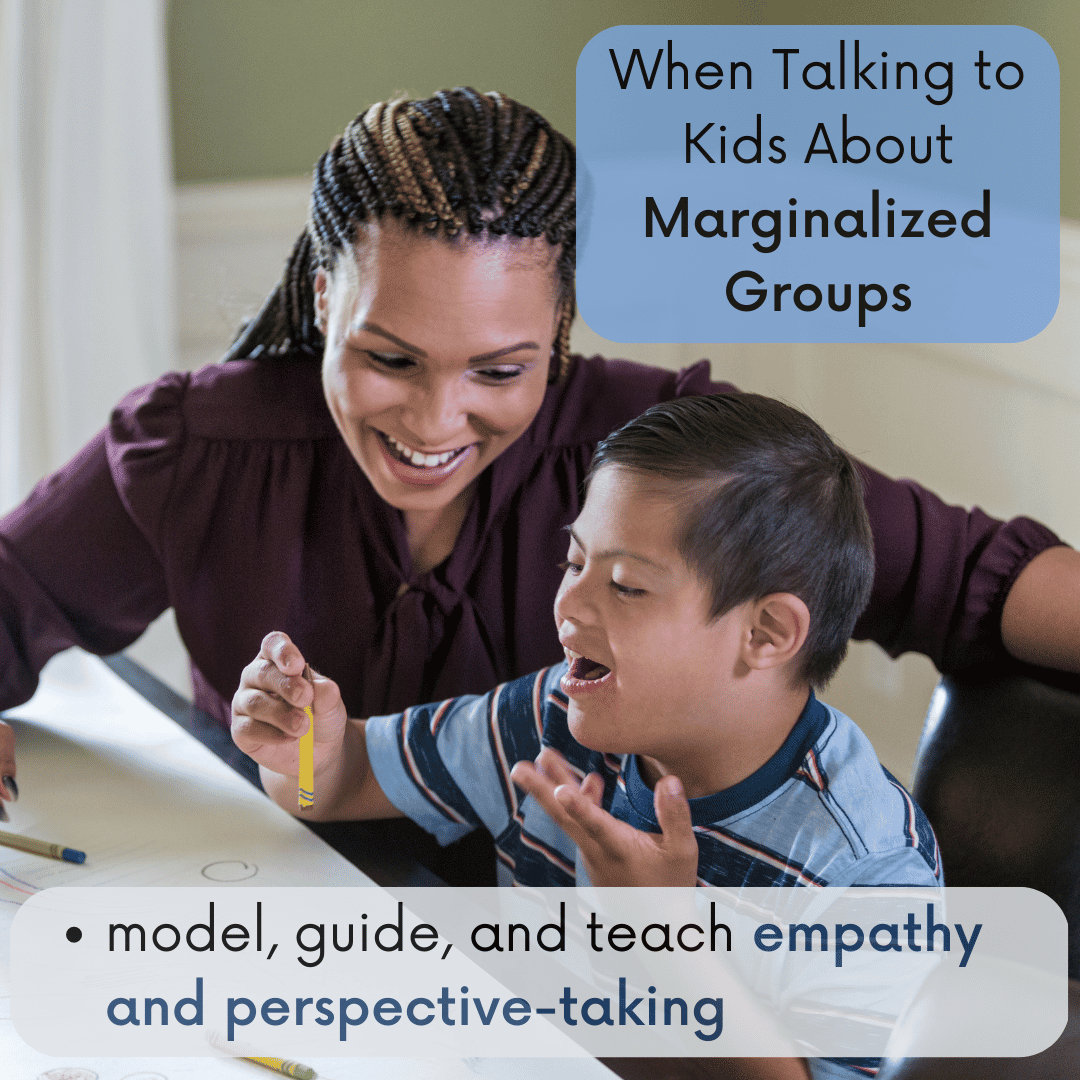
For Black people, Indigenous people, people of color, members of the LGBTQIA+ community, members of the disabled community, or anyone whose identity intersects these marginalized groups, navigating exclusion and discrimination is a daily practice that understandably affects their mental health and well-being. In fact, both the National Alliance on Mental Illness and the CDC have declared racism a public health threat. People within these groups are having much different challenging conversations with their children than those who are not to ensure their safety to the best of their ability.
Whether or not a child is a part of these groups, any child may have questions or need guidance when it comes to interacting with cultures, perspectives, or experiences that are different from their own.
As caregivers of young children, it is our responsibility to model, guide, and teach important skills like empathy and perspective-taking from their earliest years to shape kindness, respect for differences, and a sense of righteousness for the next generation.
⚠️ It has always been important to listen to and believe the voices of marginalized groups and individuals, and it is those voices that should be centered when talking to children about race and discrimination. It should also be those voices who we celebrate and uplift every day, not just one month out of the year.
What to Say About Racism and Differences: Examples by Age
- Infants and toddlers: Little ones learn how to treat others by watching us, down to our tone of voice and body language. When a toddler notices a difference, answer warmly and simply: “Yes, his hair is curly and yours is straight. Everyone looks different, and that’s what makes each of us special.”
- Preschoolers: Treat questions about differences as normal, and connect them to something your child knows: “What if all the crayons in the box were the same color? People come in different colors too, and our differences make the world more interesting.” If your child is left out or hears unkind words: “It hurts when someone says you can’t play because of how you look. That was not okay, and it is not your fault.”
- Early elementary: Listen first, and believe what children tell you about their own experiences. If your child says something unkind about others, ask, “What was it about that person that made you feel that way?” and talk it through together. You can also say: “Some people treat others unfairly because of the color of their skin. That is wrong, and it is never okay. How does it make you feel? What could we do to make sure everyone feels welcome?”
📖 Book Recommendations for Talking to Kids About Racism and Exclusion
Related: 8 Ways to Make Your Classroom Culturally Inclusive Year-Round
Talking to Kids About Mental Health
Your Own Mental Health
Let’s check in for a second and be honest with ourselves…is your mental health in a place that you would like it to be? If the answer is no, you are far from alone. According to the National Institute of Mental Health, mental illness affects tens of millions of people in the United States each year. Taking into account the pandemic, mental health has been steadily declining since 2021, especially for young people.
So, with adults and children navigating mental health issues every day, how can teachers, parents, and caregivers truly be present for the children in their lives? There is no denying that there needs to be a systemic and structural shift in the way we prioritize mental health, especially in our schools, but one thing we can do right now is allow ourselves to feel.
⚠️ Acknowledge your own feelings, what is causing them, and what boundaries or strategies help us feel better able to cope each day. When we start with ourselves, we learn to be better models for the children in our care, which will set them up for future success and well-being.
Keep Your Students’ and Your Mental Health Strong
|
The Mental Health of Adults in Children’s Lives
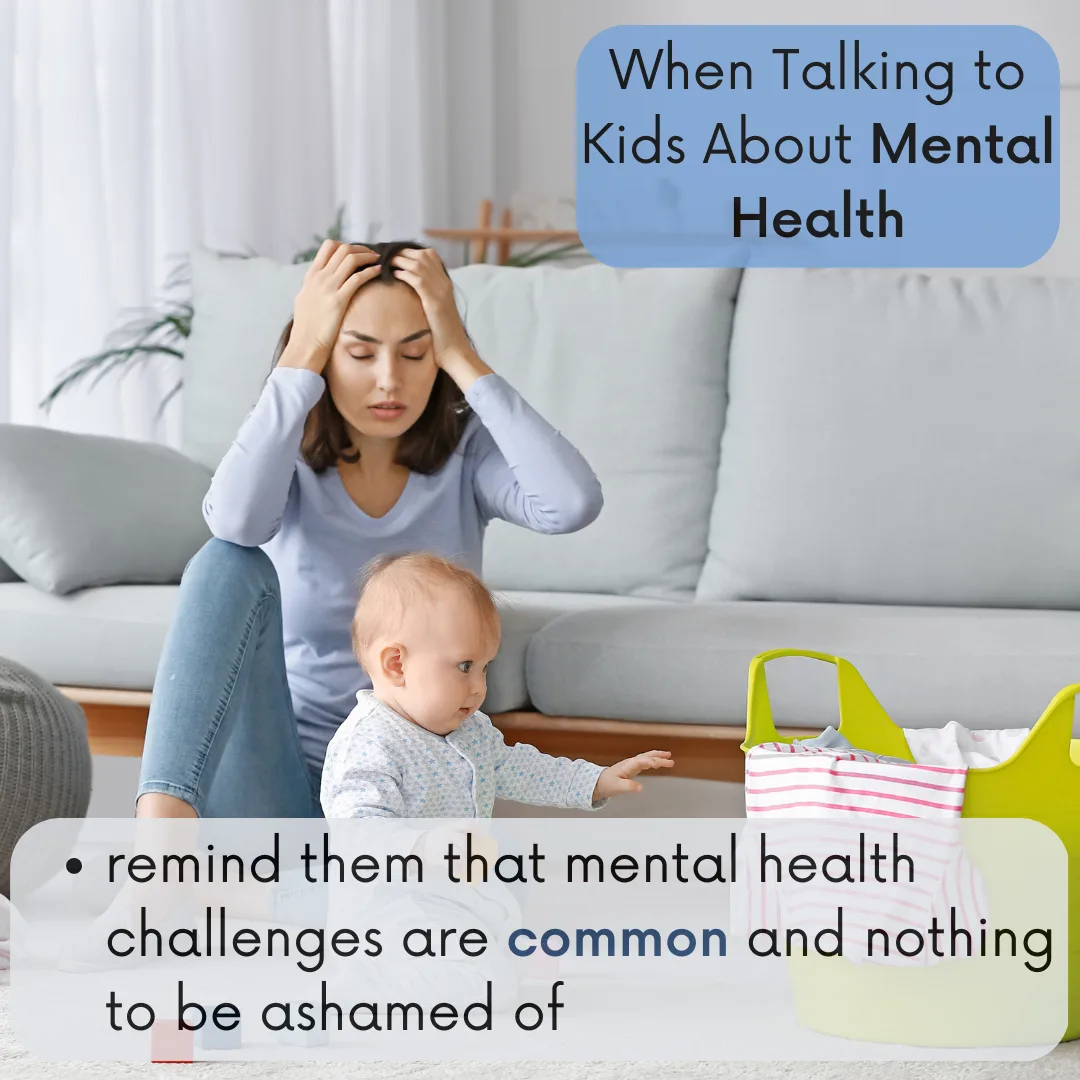
When discussing the mental health of others with children,especially that of key adults in their lives, it’s important to approach the topic with care and sensitivity.
⚠️ Start by creating a safe space for the child to ask questions and express their thoughts and feelings. Use age-appropriate language and avoid oversharing details that might be too intense or distressing.
Focus on the positive steps that can be taken to support the mental health of the person in question, such as checking in regularly, offering words of encouragement, and seeking professional help if needed.
Encourage the child to be empathetic and understanding, and remind them that mental health challenges are common and nothing to be ashamed of.
Children’s Mental Health
When talking to children about their mental health, it’s important to use age-appropriate language and be open and honest.
⚠️ Start by asking them what they are feeling and listen without judgment. Let them know that it’s okay to feel sad or anxious and that it’s important to take care of their mental health just like their physical health.
Encourage them to express their emotions and offer appropriate coping strategies, such as movement, deep breathing, fidget toys, or talking to a trusted adult.
Remind them that seeking help is a sign of strength and that you are there to support them every step of the way.
What to Say About Feelings and Mental Health: Examples by Age
- Infants and toddlers: Before they have the words, young children show their feelings through crying, clinging, sleeping, and eating. Respond calmly and put the feeling into words for them: “You’re holding on tight. You feel worried. I’m here, and we can take a big breath together.”
- Preschoolers: “You seem quiet today. What are you feeling? It’s okay to feel sad or worried. Everyone does sometimes. What would help you feel better: a hug, some deep breaths, or a quiet spot in the cozy corner?” If a parent or another important adult is struggling, keep it simple and reassuring: “Mommy is feeling very sad right now, and she is getting help so she can feel better. It is not because of anything you did.”
- Early elementary: “Taking care of our feelings is just as important as taking care of our bodies. When you feel worried or sad, you can tell me or another grownup you trust. Asking for help is a strong thing to do.” About a loved one: “Dad’s feelings have been very heavy lately, and he is seeing a doctor who helps with feelings. Lots of people need help with their feelings sometimes, and it is nothing to be ashamed of. It is not because of anything you did, and it is not your job to make him feel better. If you want, you can make him a card.”
📖 Book Recommendations for Talking to Kids About Emotions and Mental Health
Talking to Kids About Divorce and Family Changes
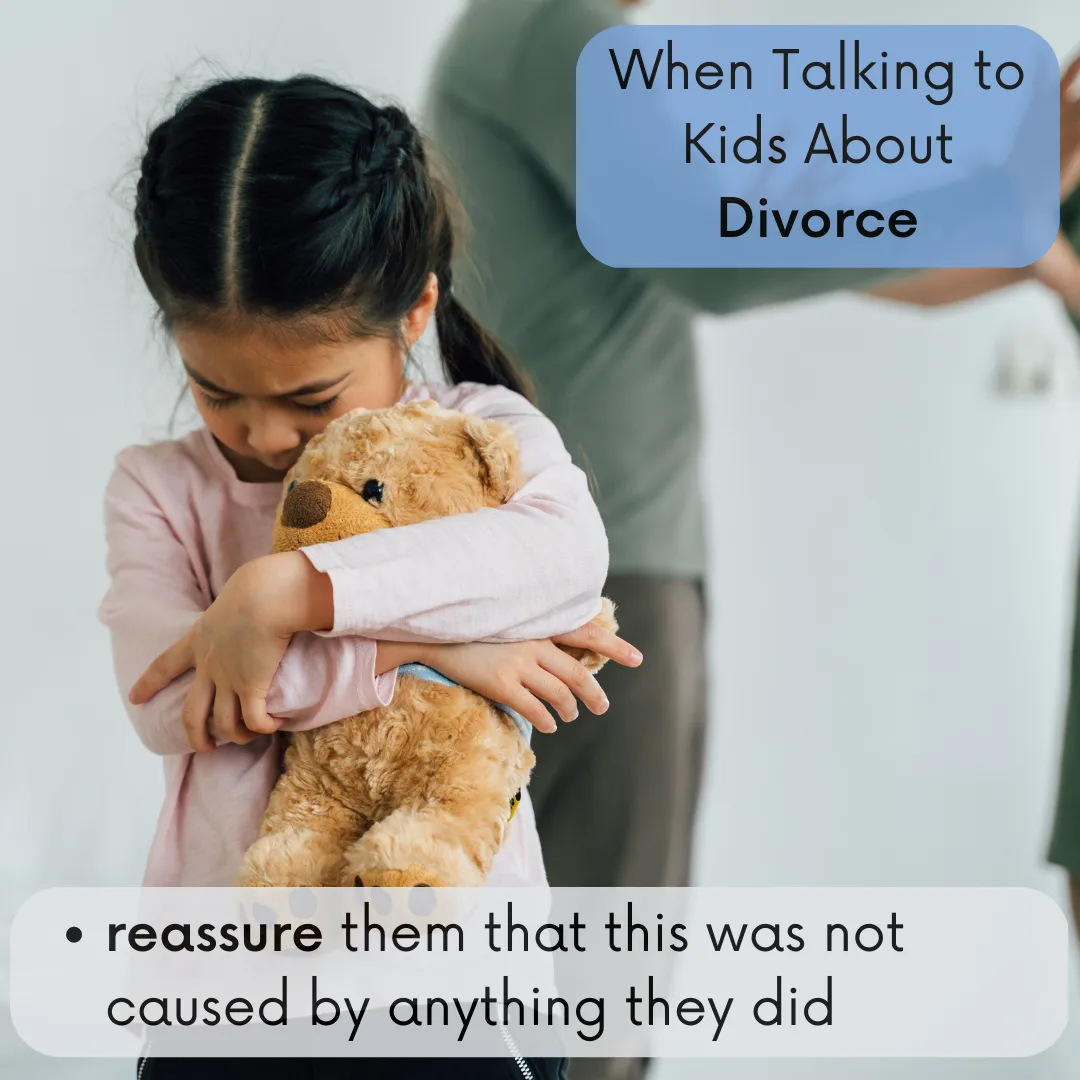
Divorce or changes in a family structure can be difficult to explain to a child, and that is especially true for young children who don’t yet have a grasp on changes that will happen in the future. They may take it personally, think it’s their fault, or ask questions like, “Who will take care of me?” For young children, like preschoolers, keeping answers short and honest and keeping the door open for future conversations is a good first step. Ensure that young children understand that they will always be cared for and loved. For families experiencing divorce, creating a schedule can help children stay consistent, understand, and know what to expect.
For older children, you can reassure them that this is an adult decision that was not caused by anything the child did. Making sure there are consistent routines in place can also help ease a transition where things may feel different or unpredictable. Most importantly, parents and caregivers can support children experiencing divorce or change in family dynamics by fostering a loving environment where children feel safe to discuss these difficult situations and ask questions as they arise.
Family Changes
A lot of changes can shift a family dynamic or routine other than divorce, and these changes may be just as challenging to discuss with children.
Remarriage, blended families, bringing home a new baby, long-distance relationships, and even the incarceration or addiction struggles of family members are all topics that children may have questions or big feelings about. When these changes occur, try your best to gradually talk to children about what is going on.
Some changes are sudden, but for those that will be happening over a period of time, do your best not to tell children everything at once.
This can be overwhelming, and they will need additional conversations anyways to process what they are thinking and feeling. Start small, leave room for questions, find out what they already know, and let them know that you are here for them to talk again when they need it.
What to Say About Divorce and Family Changes: Examples by Age
- Infants and toddlers: Routines help very young children feel safe when things change, so keep daily routines and the schedule between homes as steady as you can. Use simple words: “Daddy lives at a new house now. You will see him on Saturday. Mommy and Daddy both love you.”
- Preschoolers: Keep answers short and honest, and answer the questions young children often ask, like “Who will take care of me?”: “Mom and Dad decided to live in two different homes. We will always take care of you, and we will always love you. That won’t change. You might feel sad or mad about it, and that’s okay. It is not your fault.” When a new baby arrives: “You might feel excited and also a little left out. Both feelings are okay. I have less time right now, but I love you just as much.”
- Early elementary: “This is a grownup decision, and it did not happen because of anything you did or said. What questions do you have? You can ask me anytime, today or next week.” Then go over the schedule together, so they know which days they will be at each home and what will stay the same.
📖 Book Recommendations for Talking to Kids About Divorce and Family Changes
Talking to Kids About Illness
Illness can touch a young child’s life in many ways: their own visit to the doctor or hospital, or a parent, grandparent, or friend who is very sick. During the COVID-19 pandemic, some young children grew up with masks, distancing, and illness all around them, and families lived through an incredible amount of stress, including the symptoms and even death of loved ones. But COVID is not the only illness that affects us and the children we care about.
From something as simple as everyday germs or the common cold to something as serious as cancer, there can be a lot of fear and anxiety around getting sick, especially for young children. Teachers and caregivers can have simple conversations around handwashing, covering our mouths, and ways to keep ourselves and others safe every day to put some anxiety at bay. For the more serious conversations, be honest, acknowledge the feelings that children have, and explain that you are there to support them and are open to having conversations as they come up.
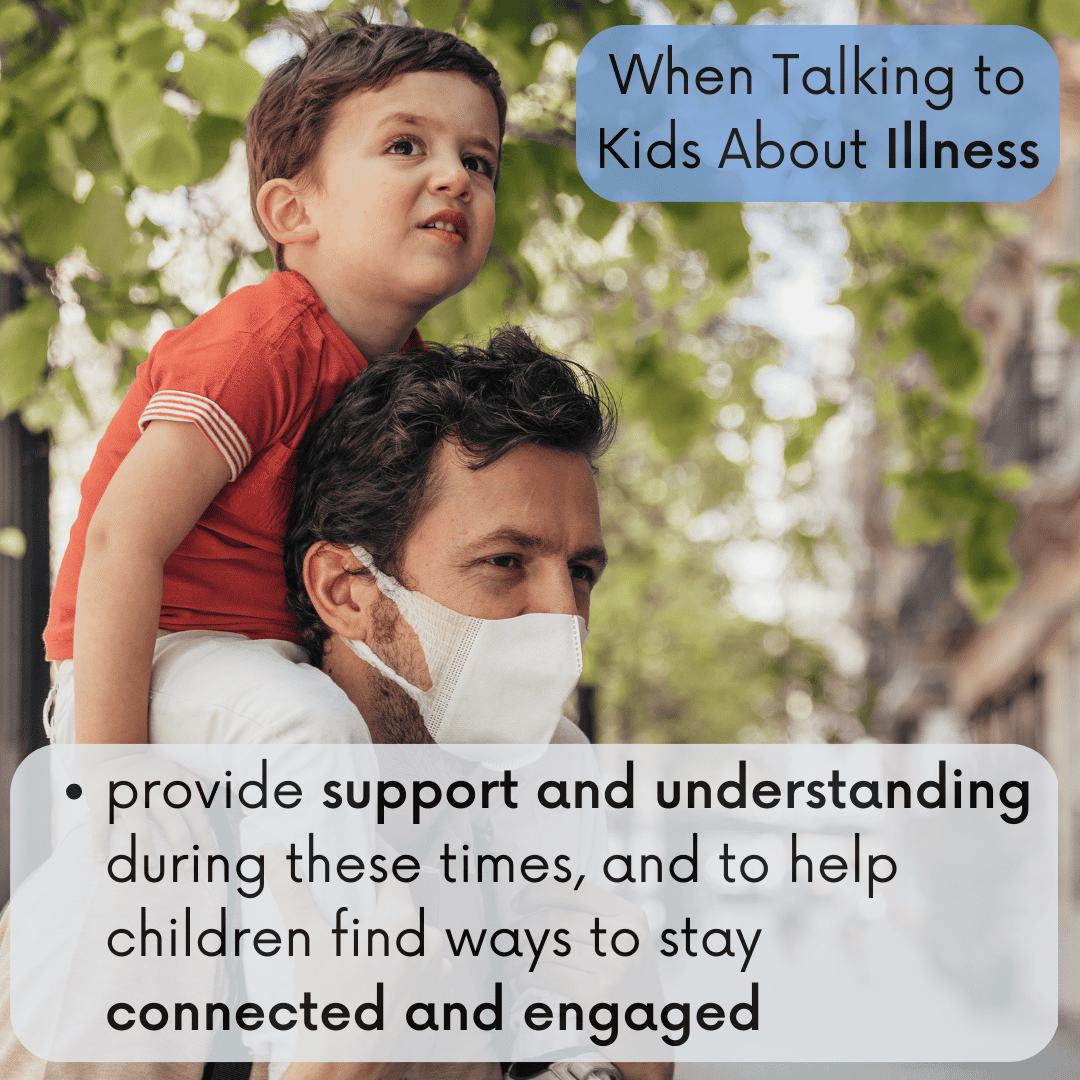
Some children and families may not be able to visit loved ones who are sick, because they live far away or because of the risk of spreading illness. Children may experience a range of emotions when they can’t visit or spend time with the people they love. They may feel lonely, sad, anxious, or frustrated. They may miss the social interactions and activities they used to enjoy, and they may struggle to understand why they are unable to see their loved ones. Children may also feel a sense of loss or grief for the experiences they are missing out on. It is important for caregivers to provide support and understanding during these times, and to help children find ways to stay connected and engaged. Video calls, phone calls, letters, and drawings can all help children stay close to someone who is sick.
What to Say About Illness: Examples by Age
- Infants and toddlers: Stay calm and close, keep routines as normal as you can, and use a few simple words: “Grandma is sick, so we can’t visit her today. You miss her. Let’s say hi on a video call.”
- Preschoolers: Answer what they ask truthfully, without adding more detail than they want: “Grandpa is sick, and the doctors and nurses are helping him. Nothing you did made him sick. It’s okay to feel worried. I feel worried too. Do you want to make him a card?” When an illness can spread, like a cold or the flu, giving children a job such as washing their hands can help them feel more in control. Before a doctor visit of their own: “You seem a little quiet. Are you feeling nervous about the doctor? Let’s talk about each step together.”
- Early elementary: Be honest about serious illness, in simple terms: “Aunt Rosa has an illness called cancer, and her doctors are working hard to help her. Cancer is not something you can catch, and nothing you did made her sick. You might feel scared, sad, or confused, and all of those feelings are okay. You can ask me anything, and if I don’t know the answer, we’ll find out together.”
📖 Book Recommendations for Talking to Kids About Illness
5 Steps for Talking to Children About Tough Topics
Children who feel scared and worried will understandably turn to adults for support, but parents and caregivers may struggle with how to even begin having those tough conversations. When it comes to talking about scary times, there is no magic formula, but there are a few steps you can follow to help you get started.
1. Remember to Take Care of You
You are your children’s safe space, and that responsibility can have its own toll on the mental health of parents, caregivers, or any adult in a helping profession. Before we can support the children in our care with managing and processing their own feelings around traumatic events or difficult situations, we need to make sure we have our own supports in place. But what does this look like?
Take time to acknowledge your own feelings, what is causing them, how you can express these feelings constructively, and what strategies help you to manage them before they escalate. From here, you can support children in doing the same so they don’t feel so weighed down by the feelings these situations can bring up.
2. Be Honest About Your Own Feelings
It’s okay to not have all the answers! Odds are the tough topics children bring up to talk with you about will be tough for you, too. You can let them know you’re not sure, that you need time to think, or that you can figure it out together, as long as you commit to following through once your own needs are met.
However, being honest about your feelings does not mean acting on emotional impulses. But we are all human, and mistakes happen. If this happens, following through and checking in is the most important step. For example, if you lose your temper around a child, taking responsibility for your behavior and apologizing shows them that making mistakes is okay —even adults can make mistakes. Calmly explain that how you responded was not okay and that you are working on expressing and managing your feelings in a better way next time. This models growth and can provide children with their own regulation strategies.
Remember that it’s okay to take a break and step away from a heated situation to calm down. You can then return to talk with your child to address any concerns or issues that might have caused heightened feelings. Practicing mindfulness and stress-reducing techniques can also help prevent emotions from escalating in the future, and this goes for adults and children alike.
3. Be on the Lookout for New or Changing Emotions
Children, especially young children, need support from adults to identify, understand, and manage their feelings before they are able to do so on their own. Be aware of changes in mood, body language, facial expressions, tone of voice, regression, tantrums, power struggles, or other indicators that children are experiencing strong feelings related to trauma. Give space for them to identify what they are feeling and offer support if needed.
Talking with Older Children
“I’ve noticed you acting different than you usually do. You seem quieter and low on energy. What are you feeling? Sometimes when I’m feeling anxious or depressed, my body responds the same way. I’m here to listen if you want to talk about it.”
Talking with Younger Children
“I can see a big frown on your face, and I’ve noticed you’ve been wanting to hit things lately. Are you feeling angry? What is making you feel that way? Things like that make me feel angry, too. Instead of hitting, we can talk about it together to help get our feelings out.”
4. Keep the Door Open for Conversations
Feelings around topics like violence, racism, divorce, and death will not be resolved after one conversation. As children continue to process their emotions and experiences, they will likely have more questions to ask or changing feelings that they may want to unpack with a trusted adult. Let children know that you are there for them in those moments and that the conversations you have together are never just one-and-done.
5. Find Routines That Work for You
Talking through strategies and routines that work for you, your family, or your classroom to help regulate your mind and body and keep you safe can be a great comfort during times of uncertainty and stress. Find regulated moments to talk through things that help you and your children feel better when you feel angry, scared, sad, or worried, and practice those strategies together.
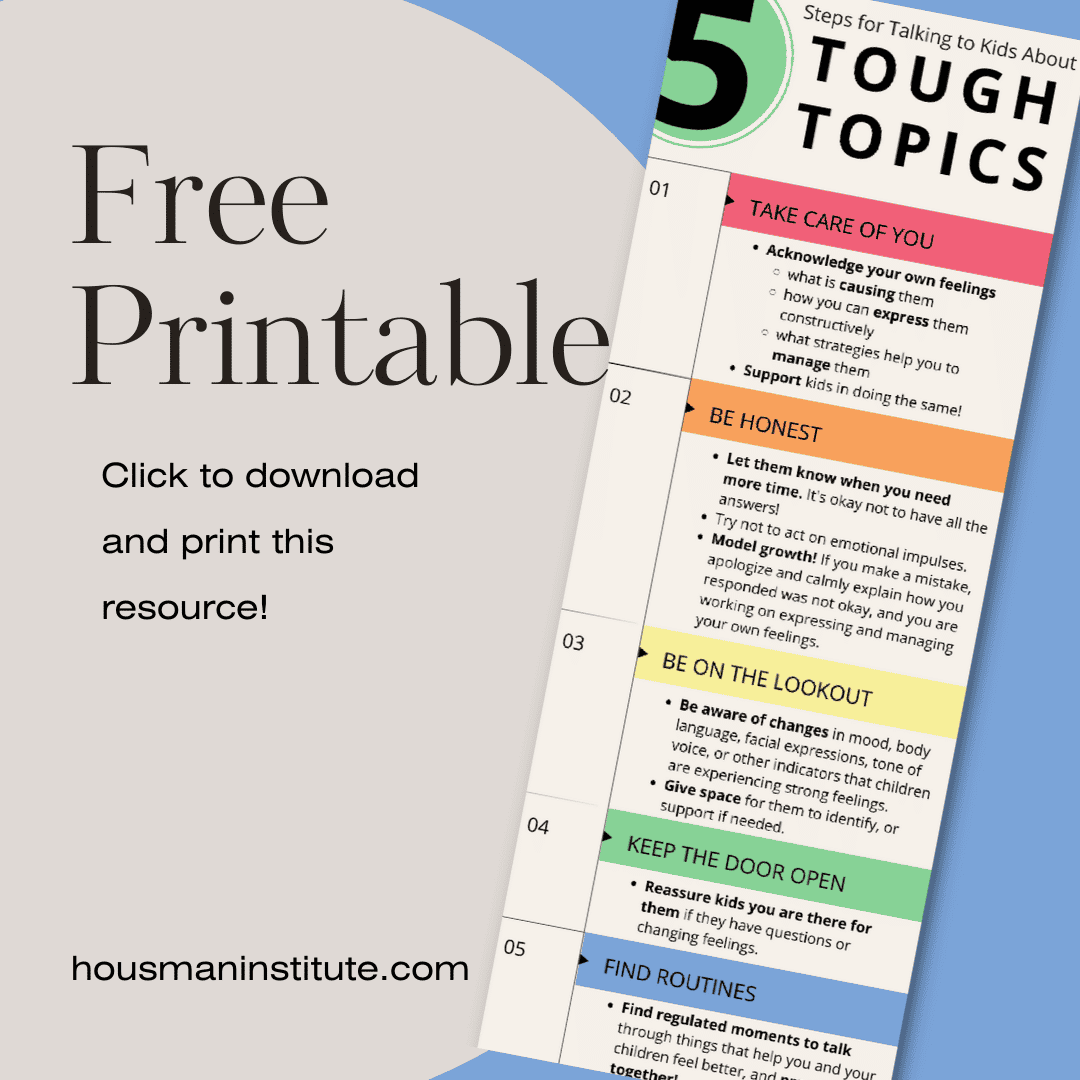
🖨️Download: 5 Steps for Talking to Kids About Tough Topics (PDF)
Trauma-Informed Tips and Strategies
Children who have experienced trauma or traumatic events require sensitive and gentle support that meets them where they are. Children who have dealt with any of the challenging topics we have covered may be dealing with trauma, which can make it difficult to go about their everyday tasks and routines like they used to.
These trauma-informed strategies and tips can guide parents, teachers, or any caregiver in beginning to reach children who are navigating these challenges, as well as the feelings and stress that go along with them.
Related: Do’s and Don’ts of Trauma-Informed Care (PDF)
Build responsive relationships.
Children need stable caregivers to provide support when they feel stuck or out of control. Responsive relationships help children feel more comfortable opening up, discussing their feelings and a cause, and knowing that they can depend on a trusted adult through challenging or traumatic times. Children grow in their resiliency within responsive relationships with adults who have the skills to identify, understand, express, and manage their own emotions and can support children in doing the same.
Ensure that children feel heard, valued, appreciated, protected, and loved.
Support children in expressing their feelings, concerns, experiences, perspectives, and ideas when they are ready, and actively listen when they do. Be attuned to their body language and responses, as well as your own responses and reactions. Respond to children sensitively and provide reassurance and validation. If children ask questions, respond in ways that they understand.
Notice changes in children’s emotions and behaviors and support them sensitively and positively.
It is important to take a positive approach when addressing changes in behavior or feelings. For example, if a child hits, calmly explain why hitting isn’t okay – because it hurts. When you close the door on inappropriate behaviors, always open the door to appropriate ones – if you hit because you are angry, let’s hit a pillow instead. Praise and provide positive attention when a child does not hit – I noticed that you used your words instead of hitting. I’m so proud of you for making that choice. Ensure that children still feel cared for, valued, and loved, even when they are demonstrating disruptive or inappropriate behaviors.
Create Safe Environments.
When experiencing trauma, children may have difficulty trusting others. Creating a safe space ensures that children feel nurtured both by responsive relationships and their environment. Establish a quiet area to make a “Calm Down Corner” or calm down space. In this safe space, include:
Build a Calm Down Kit:
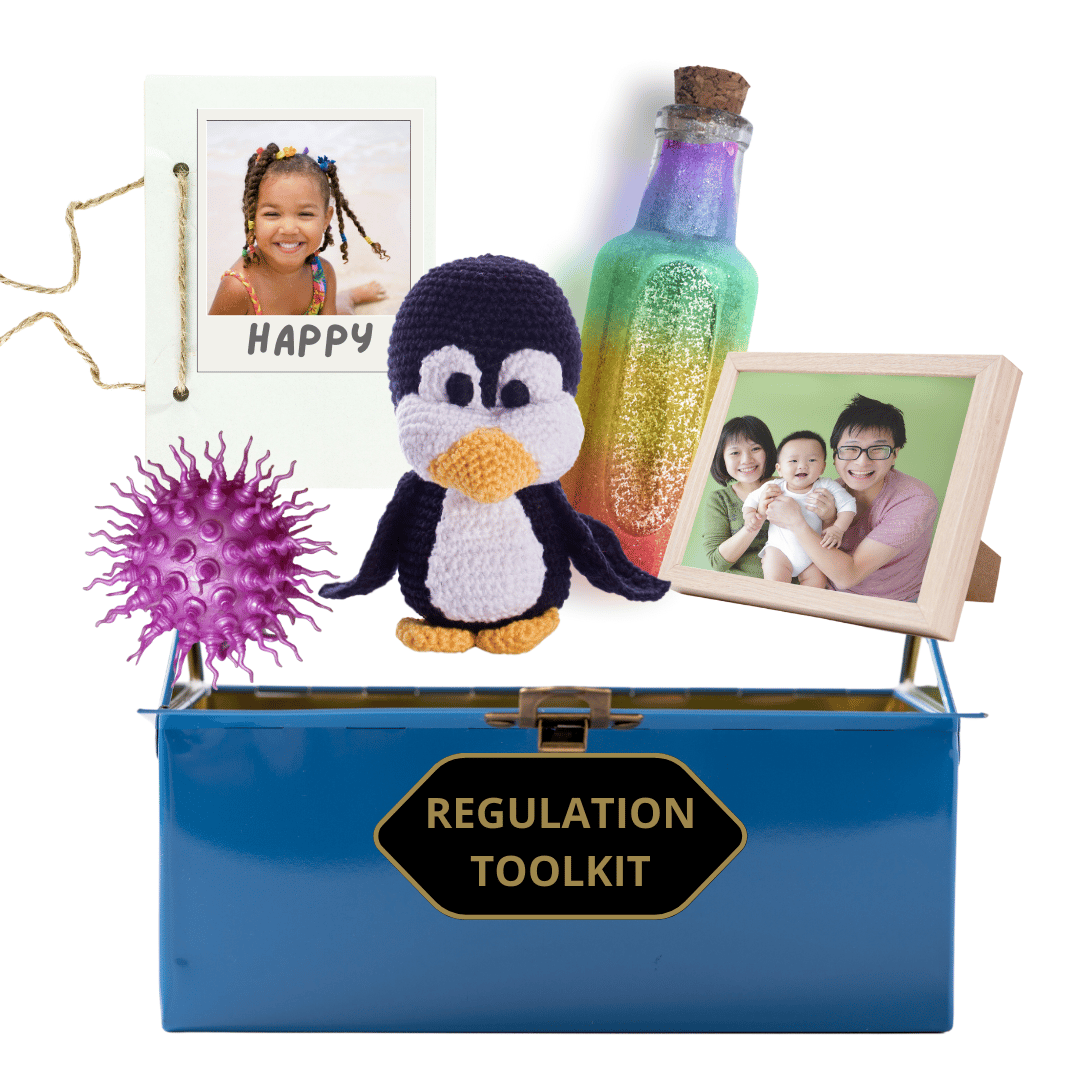
Options for children to reach for when their feelings are dysregulated that can support their emotional regulation on their own or guide them through the process of beginning to calm down with a trusted adult. These options can include:
- Calm down bottles
- Sensory stress balls
- Family photos
- Comfort items (e.g., favorite stuffed animal, favorite book)
- Our Feelings Book: Find or take pictures of different children expressing or experiencing different emotions and bind them together in a book. When children explore others experiencing these feelings, they begin to understand that they are not alone, their feelings are valued, and that all feelings are okay. Support children in identifying each feeling, discussing causes, and beginning to think about solutions to feel better. You can even have children practice expressing these different feelings along with you while reading the book.
Related: Calm Down Kit Free Printable
Encourage children to express their emotions through art and play.
Access to safe, creative outlets can be healing for children. Providing reasonable choices within their play allows them to feel in control and strengthens self-esteem and autonomy. Guide them to create art and engage in imaginative, creative play to express and process their feelings, loss, and trauma safely. Teachers and caregivers can set up Emotional Intelligence (EI) -integrated activities during regulated moments as well so children can practice expressing a wide range of emotions through art, dramatic play, music, and movement.
Children’s Book Recommendations for Talking to Children About Tough Topics
There is a big world of resources out there for supporting children of any age through challenging or traumatic moments. Here is a list of book recommendations we have compiled for you to read with children to help jumpstart a tough conversation or answer challenging questions you might not have all the answers to.
Book Recommendations for Talking About Violence and Scary Times
- The Day War Came by Nicola Davies
- On the News Our First Talk About Tragedy by Jillian Roberts
- One Thursday Afternoon by Barbara Dilorenzo
- The Breaking News by Sarah Lynne Reul
Book Recommendations for Talking About Grief, Loss, and Death
- Gilly and the Garden by Dr. Donna Housman
- Stones for Grandpa by Renee Londner
- Gone But Never Forgotten A Children’s Book About Grief and Loss by Pamela Rae Hughey
- Will It Be Okay By Crescent Dragonwagon
Book Recommendations for Talking About Racism and Exclusion
- Something Happened in Our Town A Child’s Story About Racial Injustice by Marianne Celano & Marietta Collins
- Theo’s Deliciously Different Dumplings by Dr. Donna Housman
- Don’t Touch My Hair By Sharee Miller
- Sulwe by Lupita Nyong’o
Book Recommendations for Talking About Emotions and Mental Health
- The Rabbit Listened by Cori Doerrfeld
- Healing Days A Guide For Kids Who Have Experienced Trauma by Susan Farber Strauss
- Always With You Always With Me by Kelly Rowland
- Beat Beat Thump by Allison Edwards
Related: Making the Most of Storytime: Using Children’s Books to Teach Emotional Intelligence
Book Recommendations for Talking About Divorce and Family Changes
- I Didn’t Leave Because of You by Tyechia White
- Living With Mom and Living with Dad by Melanie Walsh
- My Family is Different by Victoria Ortega
- Divorce is the Worst by Anastasia Higginbotham
- Franklin’s World Takes a Turn by Dr. Donna Housman (a new baby in the family)
Book Recommendations for Talking About Illness
- You Are the Best Medicine by Julie Aigner Clark
- The Perfect Shelter by Clare Helen Welsh
- Grandma by Jessica Shepherd
- Big Tree is Sick by Nathalie Slosse
- Riley’s Really Big Worries by Dr. Donna Housman (worries about germs and getting sick)
External resources/links used in this blog:
- https://www.gunviolencearchive.org/
- https://www.edweek.org/leadership/school-shootings-this-year-how-many-and-where/2023/01
- https://www.edweek.org/leadership/school-shooter-drills-is-there-a-right-way-to-do-them/2022/06
- https://www.nami.org/Press-Media/In-The-News/2022/Alarming-Worldwide-Decline-in-Mental-Health?feed=In-the-news#:~:text=800%2D950%2D6264&text=The%202021%20Mental%20State%20of,over%20220%2C000%20internet%2Denabled%20adults.
- https://www.nimh.nih.gov/health/statistics
- https://www.todaysparent.com/family/kids-and-divorce-an-age-by-age-guide/
- https://www.nimh.nih.gov/health/find-help
- https://www.healthychildren.org/English/healthy-living/emotional-wellness/Building-Resilience/Pages/Tips-to-Support-Children-When-a-Parent-is-in-Prison.aspx
- https://newdirectionfamilylaw.com/blog/child-custody/child-visitation-when-substance-abuse-is-an-issue/#:~:text=Courts%20may%20order%20visitation%20that,to%20visit%20with%20the%20child.
).png?quality=low&width=310&height=310&name=Lauren%20Sturtz%20(Instagram%20Post%20(Square)).png)
About the Main Contributor: Lauren Sturtz is a begin to ECSEL educator who has worked in the field of early childhood education for eight years. She was a preschool and Pre-K teacher for five years, where she developed curricula and activities focused on children’s emotional development. For the past few years, she has been working at Housman Institute developing ECSEL curriculum, educator training course content and resources, and blogs about content she is passionate about, including equity and inclusion, trauma-informed teaching, and process-based, child-led learning opportunities.